
Last updated November 4, 2026
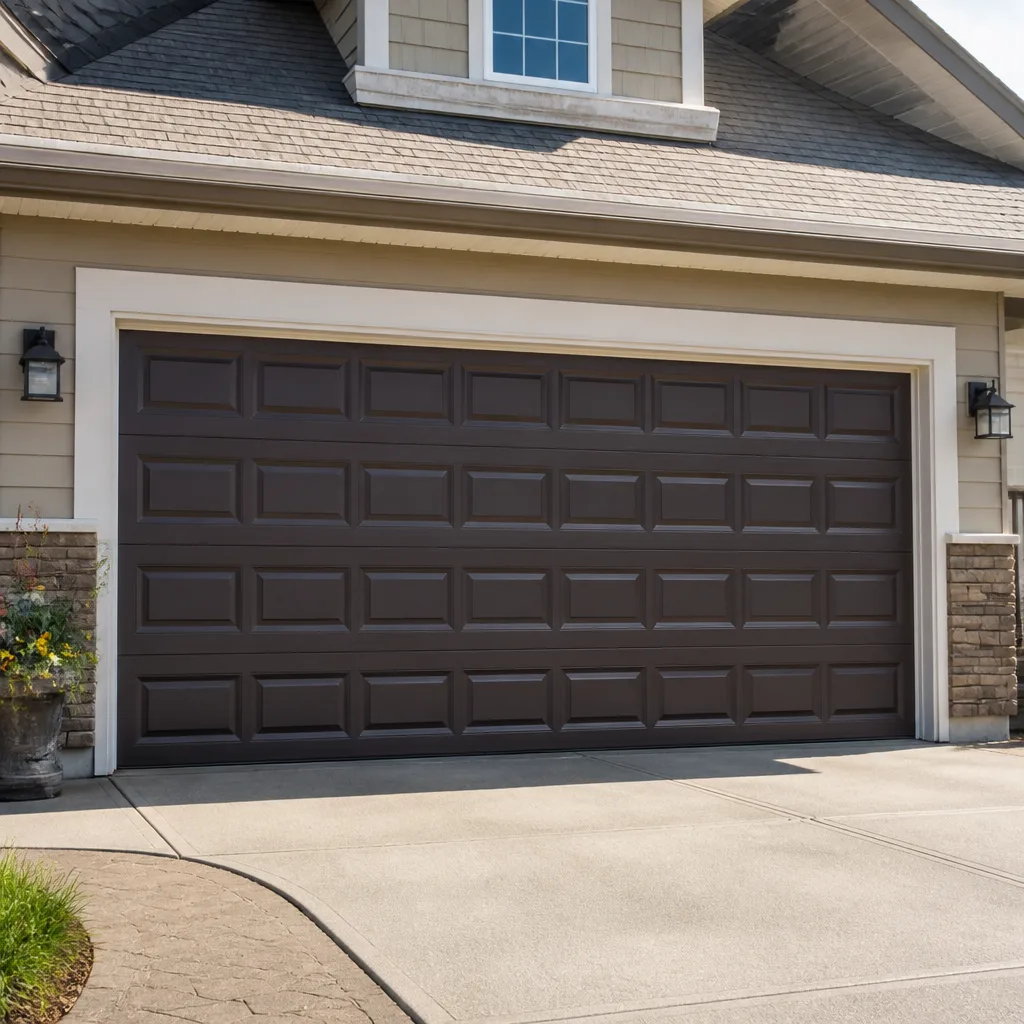 Raised-panel steel
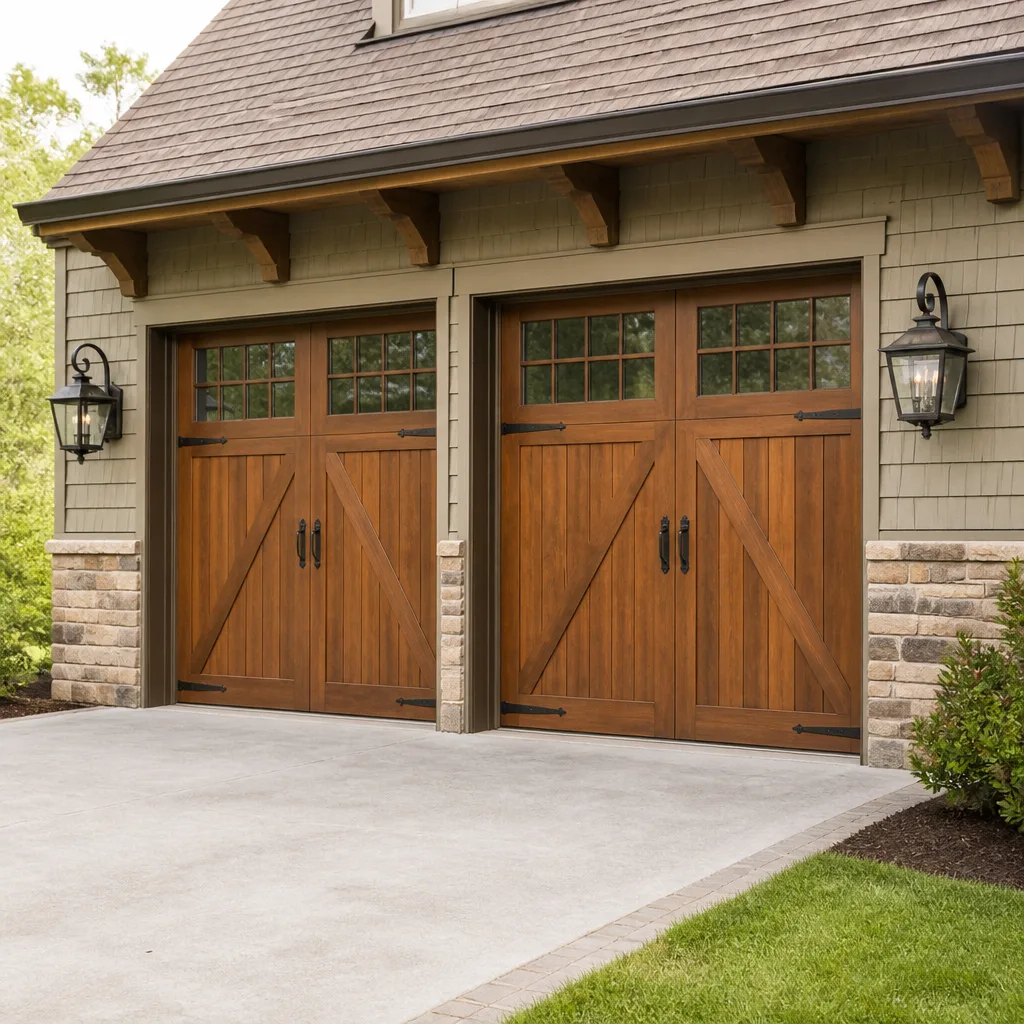 Carriage house
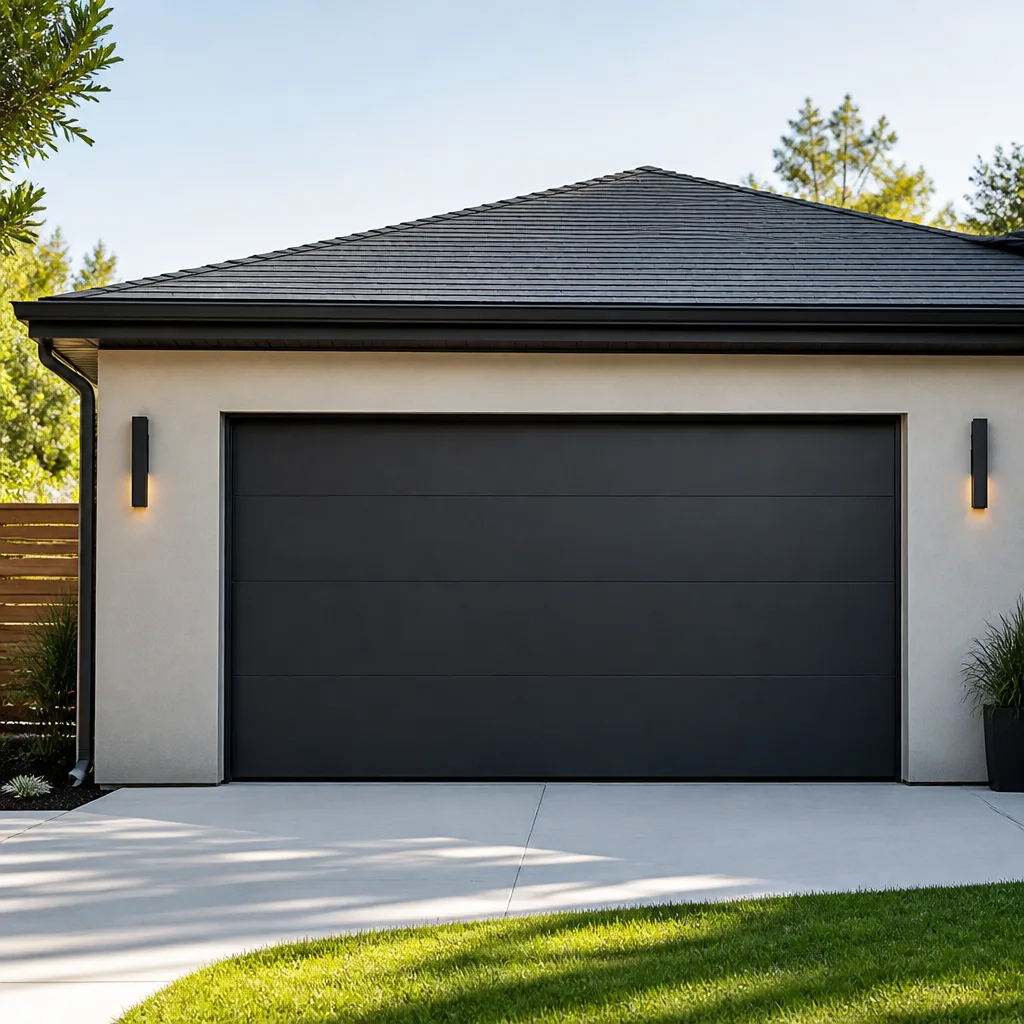 Modern flush
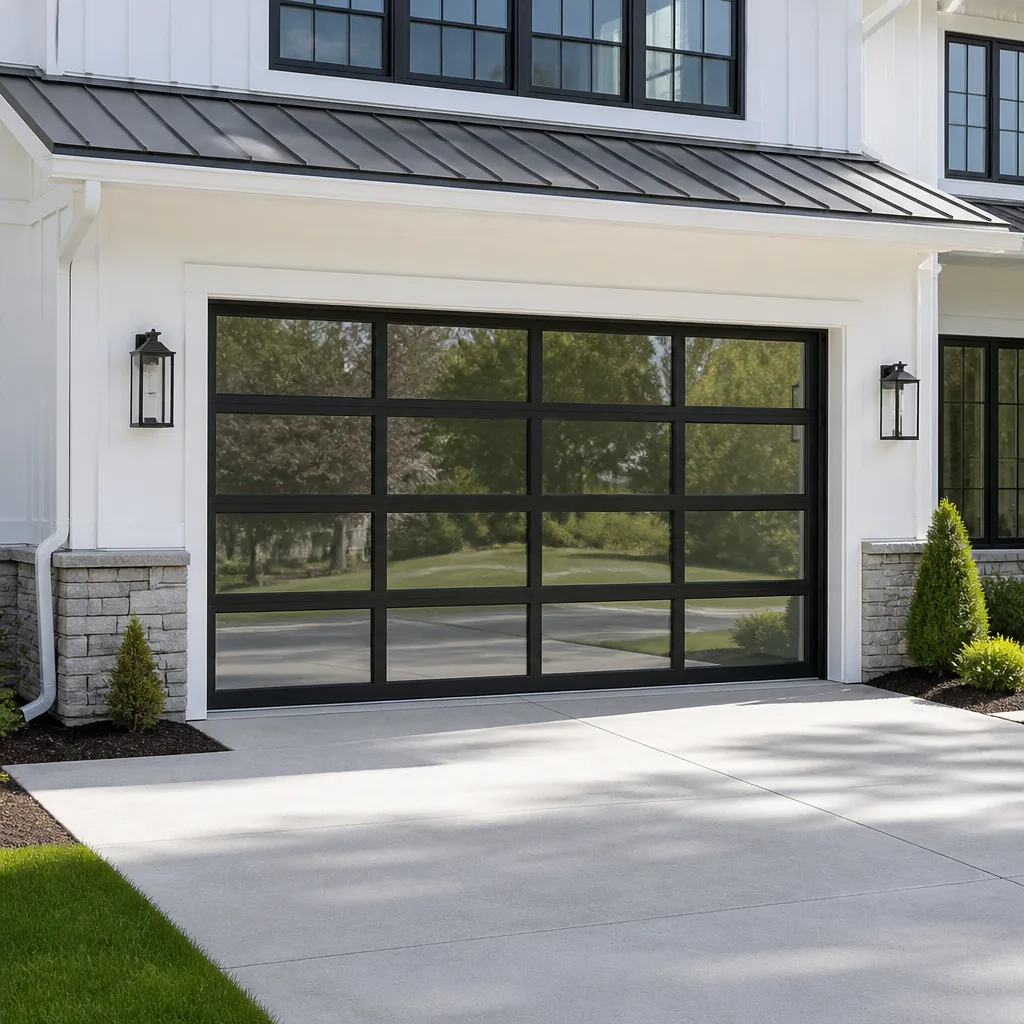 Full-view glass
 LiftMaster openers
 Chamberlain openers
Full 25-point door and opener safety check with every visit - springs, cables, rollers, tracks, and your LiftMaster or Chamberlain opener included
You get a price before we start. It does not change when the truck arrives.
Get your free estimateHow to Hire a Garage Door Contractor in Highland: A Step-by-Step Guide
Most homeowners in Highland don’t get burned by a garage door contractor who shows up without a truck. They get burned by a contractor who shows up with a clipboard and a low number, then finds reasons to inflate it once the door is half-disassembled in the driveway. The real skill in hiring isn’t spotting the obvious fraud, it’s recognizing the structural gaps in a quote, a license, or a scope of work that turn a simple repair into a rolling invoice. This guide walks through the process the way a building inspector would, not the way a review site would. You’ll learn what to verify before you call, what to ask before you sign, and what a legitimate garage door job in Highland should look like on paper.
Quick Answer
To hire a garage door contractor in Highland, verify their California C-61/D28 specialty license on the CSLB database, ask whether they source OEM or aftermarket parts, and require a written scope of work with a fixed price before the job starts. A multi-brand specialist like Prestige Garage Door Repair gives you flexibility across LiftMaster, Chamberlain, Genie, Clopay, Amarr, Wayne Dalton, Craftsman, and Raynor equipment, plus the full lifecycle from garage door repair to garage door opener repair to new installation. The estimate should be free, the price should be set before work begins, and the brand on your door should never be an obstacle.
Styles & brands we work with
- Raised-panel steel
- Carriage house
- Modern flush
- Full-view glass
- LiftMaster openers
- Chamberlain openers
Table of Contents
- Verify the California Contractor License
- Ask About Parts Sourcing: OEM vs. Aftermarket
- Read Service Call Quotes for Red Flags
- Multi-Brand Specialists vs. Single-Brand Dealers
- What a Written Scope of Work Must Include
- Highland-Specific Considerations
- Questions to Ask Before You Sign
- Red Flags That Signal a Bait-and-Switch
Verify the California Contractor License
The specific license classification for garage door work in California is C-61/D28, a specialty contractor designation for door and gate installation and repair. This is narrower than a general building contractor license, and it matters because Highland homeowners often assume any contractor with a license number can legally work on a garage door. That’s not true. A general contractor can frame a wall, but a garage door spring under tension is regulated work that requires this specific classification in most municipalities, so ask your city’s building department if you’re unsure about local enforcement.
Here’s the verification process we recommend to anyone hiring in Highland:
- Ask for the license number before scheduling. Legitimate contractors expect this. If someone hesitates or says they’ll get it to you later, treat that as a signal to keep looking.
- Check the CSLB database. The California Contractors State License Board maintains a public database. Enter the number and confirm the classification is C-61/D28, not a general B license.
- Confirm the license is active and current. A suspended license is worse than no license. The database shows standing.
- Verify the name on the license matches the person or company you’re dealing with. Subcontractors who work under someone else’s number are a common issue in the garage door trade.
- Ask about insurance and bonding directly. A C-61/D28 license requires a bond, but ask about liability insurance coverage for the work itself. We carry it, but not every outfit does.
The point isn’t to interrogate a contractor. It’s to establish that the person you’re hiring has the legal standing to touch a door that weighs several hundred pounds and is held up by high-tension springs. Garage door springs and cables carry enormous stored force. When they fail or are handled incorrectly, the injury risk is severe. This is not a job for a handyman with a general license or no license at all. A trained professional should always do this work.
Ask About Parts Sourcing: OEM vs. Aftermarket
Two contractors can quote you $280 to replace a garage door spring. One installs a factory part from the door’s original manufacturer. The other installs a generic part that cost $9 to produce and ships in bulk. Both springs fit. One lasts seven to ten years under normal Highland conditions. The other might snap in eighteen months. The difference is parts sourcing, and almost no homeowner thinks to ask about it until the second spring fails.
OEM, or original equipment manufacturer, parts come from the company that made your door or opener. For a Wayne Dalton door, that means a Wayne Dalton-spec spring. For a Craftsman opener, that means a Craftsman or Chamberlain-produced logic board. OEM parts are built to the same tolerances and metallurgy as the original component. Aftermarket parts are produced by third-party suppliers. Some are acceptable. Many are not, especially in the spring and cable category where metallurgical shortcuts shorten service life dramatically.
When you’re comparing contractors in Highland, ask these questions about parts:
- Do you use OEM or aftermarket springs, cables, and rollers? The answer tells you immediately how the contractor thinks about durability.
- What brand of replacement parts will go on my door? A contractor who can name the brand without pausing is one who orders parts deliberately.
- Will the part match the manufacturer spec or just the size? A spring can measure correctly but use cheaper wire. Spec matters.
- Is the part warrantied, and for how long? OEM parts typically carry manufacturer backing. Aftermarket warranties vary.
This matters most with springs and cables, the two components that carry the door’s full weight. A shorter service life there means another service call, another invoice, and another spring swap. From a broken spring to a full new door, the quality of hidden components determines what the job actually costs over five years, not just the number on the first invoice.
Read Service Call Quotes for Red Flags
The service call quote is where most bait-and-switch tactics hide. A low initial number gets the technician to your door. Then the structure of the quote, not the honesty of the contractor, does the upselling. We’ve seen the pattern enough times in Highland to describe it plainly: a homeowner schedules a repair because the quote was $49 or $89, and the technician arrives with a diagnostic fee that only applies if you decline the repair. That’s the legitimate version. The illegitimate version is a “trip fee applied to repair” clause that gets quietly reworded to “diagnostic fee not credited” once the work changes scope.
Here’s how to read the language before you book:
- Confirm whether the estimate is free. Many Highland contractors offer free estimates. If a company wants a service call fee just to look at the door, that’s not automatically a red flag, but it should be a non-negotiable line item, not an ambiguous clause.
- Look for “applied to repair” language. If a fee is credited toward work you approve, that’s fair. If the language says the fee might not be credited, ask why. The answer should be direct.
- Ask what happens if the job expands. A locked door can hide a broken cable. A spring job can reveal a bent track. A written estimate should state whether added work requires a new written estimate or can proceed without one.
- Never accept pricing that changes mid-job without a paper trail. In California, verbal scope changes are hard to enforce. Written scope changes are not.
The free estimate should produce a written price that’s set before any work starts. At Prestige Garage Door Repair, the price you approve is the price on the written estimate, and nothing changes without a new written estimate. That’s how it should be. If a contractor in Highland won’t do that, the deal you’re getting is not the deal you think you’re getting.
Multi-Brand Specialists vs. Single-Brand Dealers
Some garage door contractors in Highland are factory-authorized dealers for one brand. Others are independent specialists who work across multiple brands. The right choice depends on your situation, but most homeowners are better served by the multi-brand model, and here’s why.
A single-brand dealer knows their product line deeply. If you own a Raynor door and you’re hiring a Raynor dealer, you’re getting focused expertise. But the garage door on your home may have been installed years ago by a previous owner, and matching the current brand is not always the best path. A door with a LiftMaster opener, a Wayne Dalton spring assembly, and an aftermarket track system requires a contractor who can work across whatever is actually bolted to your ceiling. A single-brand dealer may tell you to replace everything with their line. That’s not always dishonest, but it’s often unnecessary.
Multi-brand specialists like Prestige Garage Door Repair work on the brand you already own. Our technicians are trained across eight of the most widely installed garage door and opener brands in the U.S.: LiftMaster, Chamberlain, Genie, Clopay, Amarr, Wayne Dalton, Craftsman, and Raynor. The brand on your door is never an obstacle. That matters in Highland, where housing stock spans decades and the equipment in the garage reflects whatever was standard at the time the home was built, not what’s on sale this year.
When a single-brand dealer is the right hire: you’re replacing the entire system, you want a specific manufacturer’s warranty program, and you’ve already decided on that brand. When a multi-brand specialist is the right hire: you need a repair, you’re unsure whether to repair or replace, and you want an honest assessment rather than a sales pitch. Repair or replace, we’ll tell you which one actually makes sense.
What a Written Scope of Work Must Include
A garage door project in Highland needs more than a number. A legitimate written scope of work is a document you can hold up if the job goes sideways. In California, verbal agreements over a door that could total $1,800 are not worth the paper they’re not written on. The scope should be specific enough that another contractor could read it and know exactly what was supposed to happen.
A proper scope of work for a garage door job should include:
- The exact work being performed. Not “spring repair.” Not “door service.” It should say: replace both torsion springs with OEM-spec parts, inspect cables, lubricate bearings and rollers, test balance on both sides, and verify the safety reverse system.
- The specific part numbers or brand and model references. A spring is not a spring. A scope that says “parts as needed” is a scope that lets the contractor decide the margin on-site.
- A fixed price or a clearly defined pricing methodology. The price should be set before the work starts, not before the work is described. All labor and materials should be captured in that number.
- The warranty terms. What’s covered, for how long, and whether parts, labor, or both are included. If it’s not in writing, it doesn’t exist.
- A statement that no work beyond the scope will be performed without a separate written authorization. This is the single most important sentence in the document for preventing invoice creep.
We write scopes this way because we’ve seen what happens when contractors don’t. A Highland homeowner with a loose cable should not discover that the track replacement wasn’t in the quoted price until after it’s installed. The written scope is the only thing that separates a legitimate job from a rolling estimate. It’s also what makes the job enforceable if you ever need to escalate a dispute.
Highland-Specific Considerations
Highland sits in San Bernardino County, a residential city with a mix of tract homes from the 1960s and 1970s, newer subdivisions, and a climate that’s dry and hot most of the year. That climate shapes how garage door equipment ages. The heat and UV exposure in a Highland summer are hard on seals, weatherstripping, and plastic opener components. Metal parts, by contrast, tend to fare well. Unlike coastal cities or humid climates, corrosion from moisture is not a primary concern here. What we see instead is thermal fatigue: springs that open and close in 100-degree heat, day after day, losing temper slightly sooner than they would in a moderate climate. That’s not a warranty issue, it’s reality.
Hail is uncommon in Highland, so impact damage to door panels more often comes from vehicle strikes, stray sports equipment, or the occasional strong wind that flexes the door in its tracks. The dry air means less rust on hardware, but it also means lubricant breaks down faster. A garage door in Highland that hasn’t been lubricated in three years is likely to have dry rollers and a squeaky hinge assembly, even if the mechanical parts are otherwise sound.
For the homeowner, this means a few things. First, any contractor who says garage door springs last exactly the same number of years regardless of climate is not being straight with you. Second, regular maintenance here pays off differently. The door isn’t fighting moisture, but it is fighting heat and UV, and the lubrication schedule should reflect that. Third, when you’re hiring in Highland, look for a contractor who knows the local housing stock, because the garage door configurations in the older neighborhoods here vary widely, and a technician who’s seen the homes built in East Highlands or the subdivisions near Baseline understands what they’re walking into before the door opens.
Questions to Ask Before You Sign
Here’s a checklist we recommend every Highland homeowner run through before approving a garage door job:
- Are you licensed for C-61/D28 work, and can I verify that on the CSLB database? If the answer is defensive, slow, or vague, move on.
- Do you carry liability insurance and workers’ compensation coverage for your technicians? A door that falls during installation can cause injury or property damage. The wrong answer exposes you, not them.
- Will the parts be OEM or aftermarket, and what’s the warranty on each? The answer should be immediate and specific, because a good contractor knows what they order.
- Is the estimate free, and is the price fixed once I approve it? Any hesitation on this question is a red flag.
- Will I get a written scope of work before the job starts? If the document is less than half a page, it’s not a scope, it’s a receipt.
- Does the price include gates, permits, or other local requirements if they apply? Most residential garage door repairs don’t need permits in Highland, but if yours involves substantial structural changes, ask.
- Who handles the opener? A modern opener with smart-home integration is a different skill set than a chain-drive unit from 1995. Your opener is smarter than ever, so are the technicians who should be repairing it.
Red Flags That Signal a Bait-and-Switch
- A quote that sounds too low to cover parts and labor. A spring pair replacement that’s quoted at $110 total, including the service call, means someone is planning to make up the difference once the door is off the rails. The math doesn’t work otherwise.
- Refusal to provide a license number before you book. There is no legitimate reason to withhold that information. Any contractor who won’t give you their CSLB number before scheduling is telling you something important.
- Pressure to sign the same day with a discount for immediate approval. A good contractor doesn’t need urgency to close a job. The work speaks for itself, and the estimate should hold up to a few days of thought.
- Vague language about parts, warranties, or scope. “We’ll take care of it” is not a description of work. If you can’t explain what you’re buying to a neighbor, you don’t know what you’re buying.
- An estimate that doesn’t separate parts from labor. A bundled number hides the markup. You should be able to see how much the parts cost and how much the work costs. A contractor who won’t show you that breakdown is not your ally.
- The quote changes once the door is disassembled. A door that’s lying in four pieces on your driveway is a door you’re now committed to reassembling. Contractors who want to renegotiate at that point are leveraging your vulnerability. The written estimate should prevent this.
Common Mistakes to Avoid
- Skipping the license verification because the company has good reviews. A polished online presence can coexist with a suspended license. Reviews are written by strangers. The CSLB database is written by the state.
- Choosing the lowest quote without comparing scope. Two quotes for $300 can describe entirely different jobs. One replaces a single spring with an aftermarket part. The other replaces both springs with OEM parts and includes a track inspection. The higher number is often the better deal.
- Not asking about warranty before the work starts. A company that’s proud of its work puts the warranty in writing without being asked. If you have to ask after the job is done, the answer is probably no.
- Waiting until the door fails completely to find a contractor. A door that’s been groaning and hesitating for weeks won’t fail at a convenient moment if it’s a Saturday, and we’re closed. We answer 24/7 and dispatch Sunday through Friday. When the door finally lets go, you want a number you already trust.
- Assuming a brand-matched dealer is always the right choice. Brand-loyalty is great if you’re buying new, but it can cost you if a repair on a mismatched system is all you need. Ask whether the repair can be done in place before you commit to a full replacement.
- Not getting the price in writing before work begins. This is the most common and most costly oversight in garage door work. A verbal number is not a number. A written estimate is.
See the difference
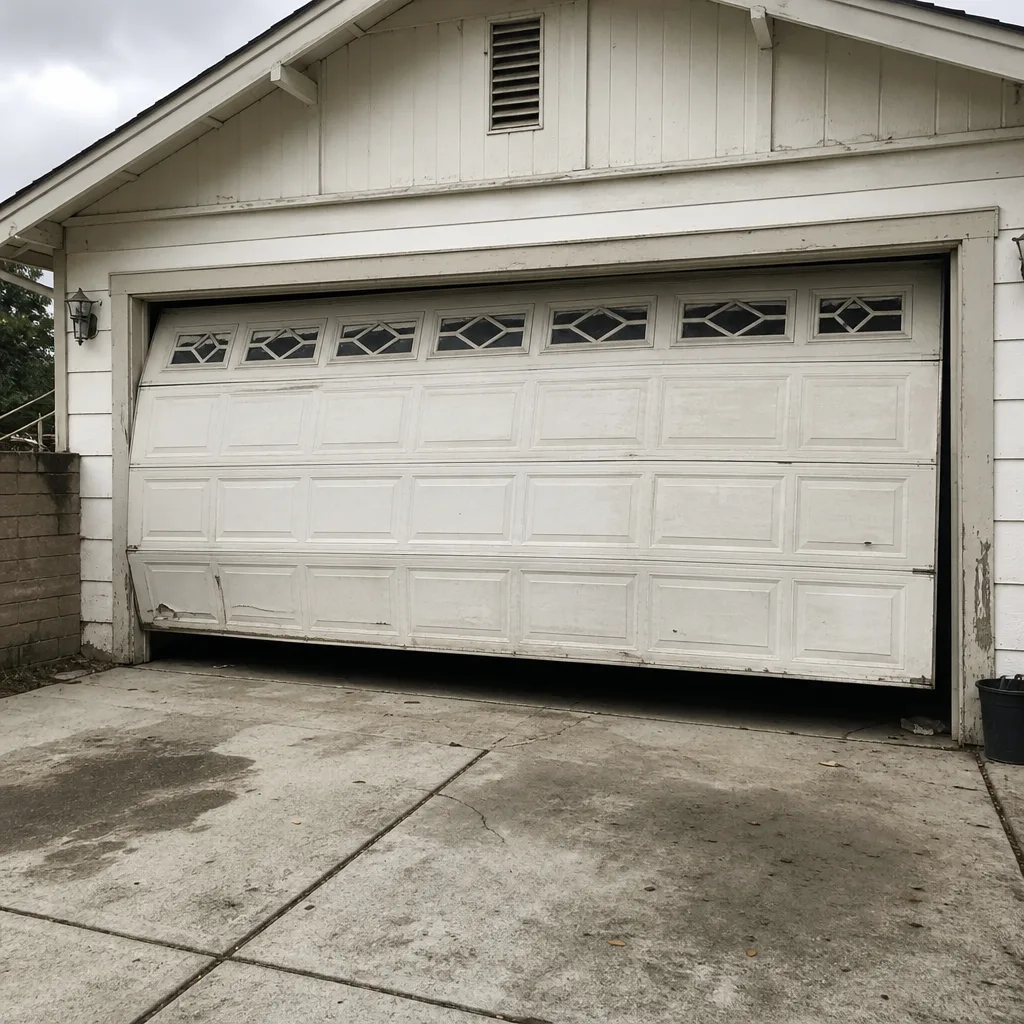 Before
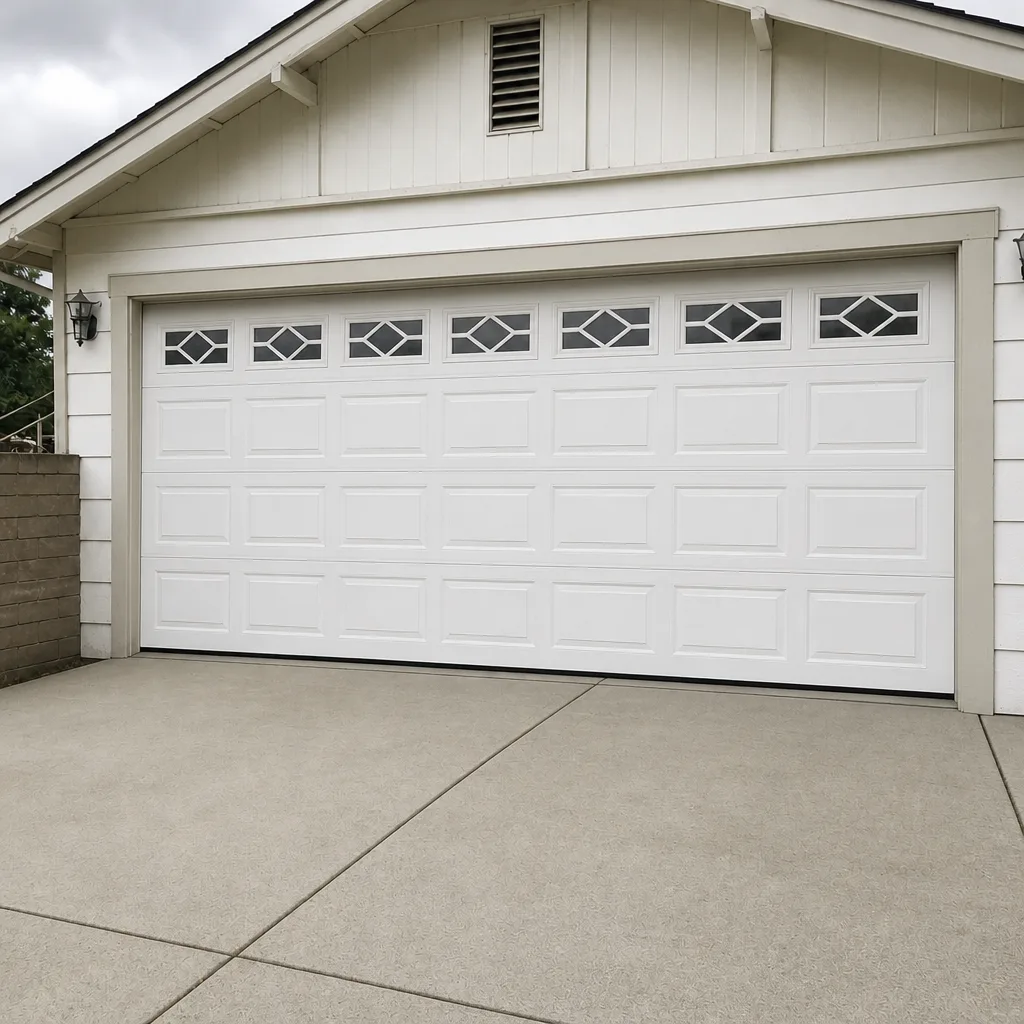 After
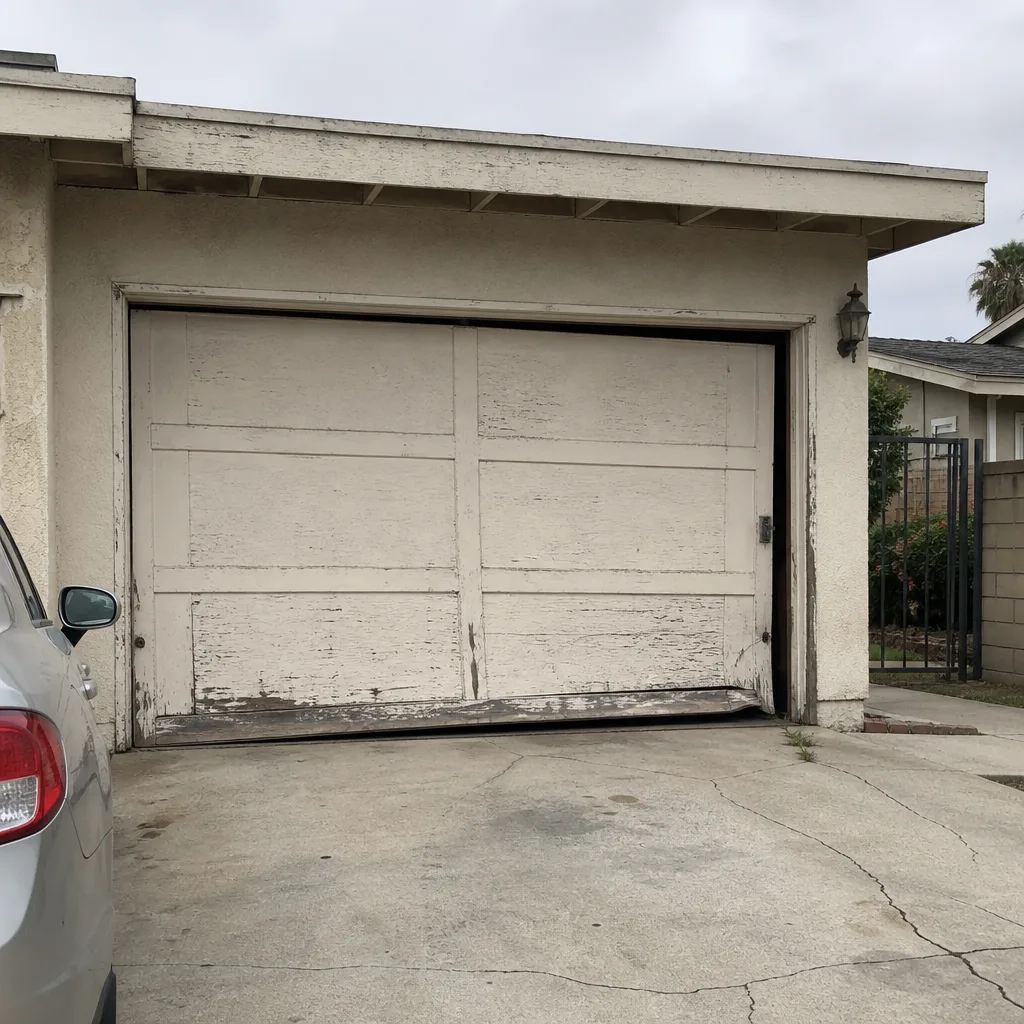 Before
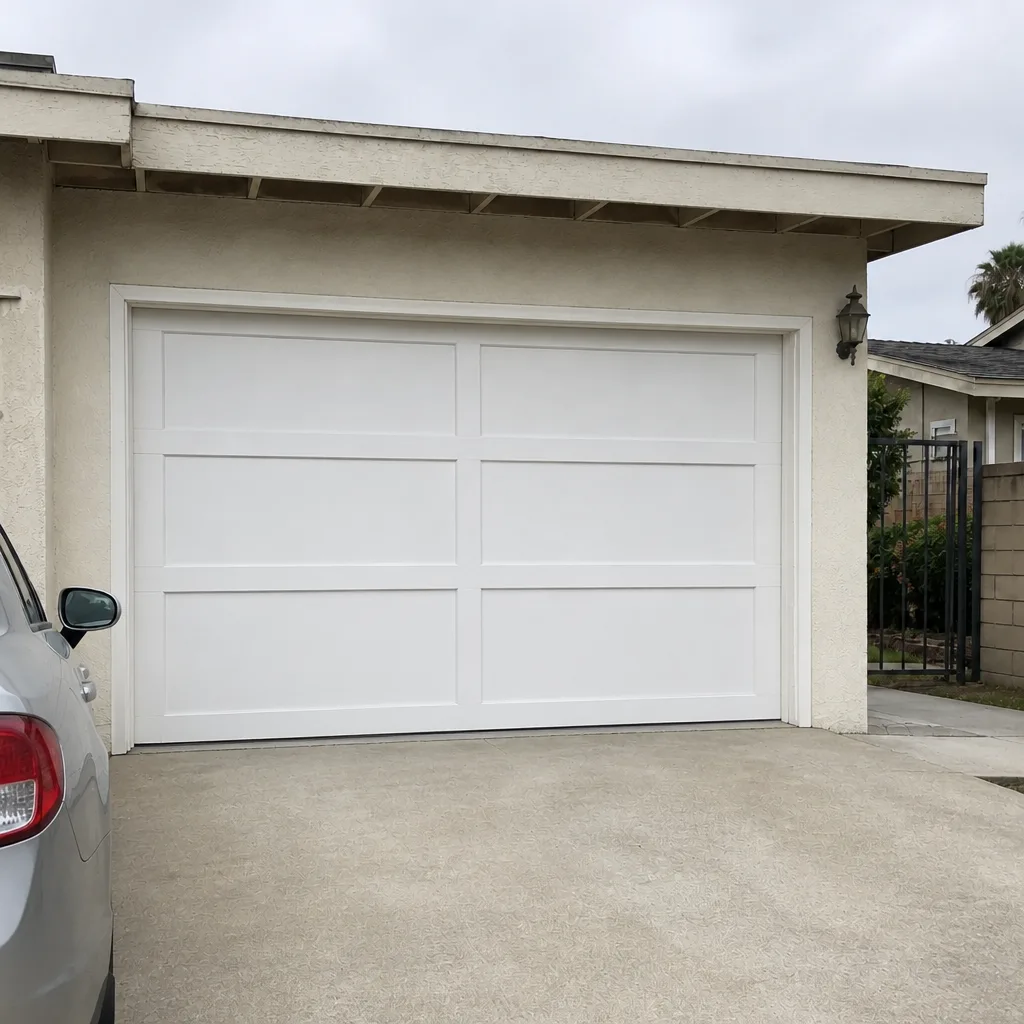 After
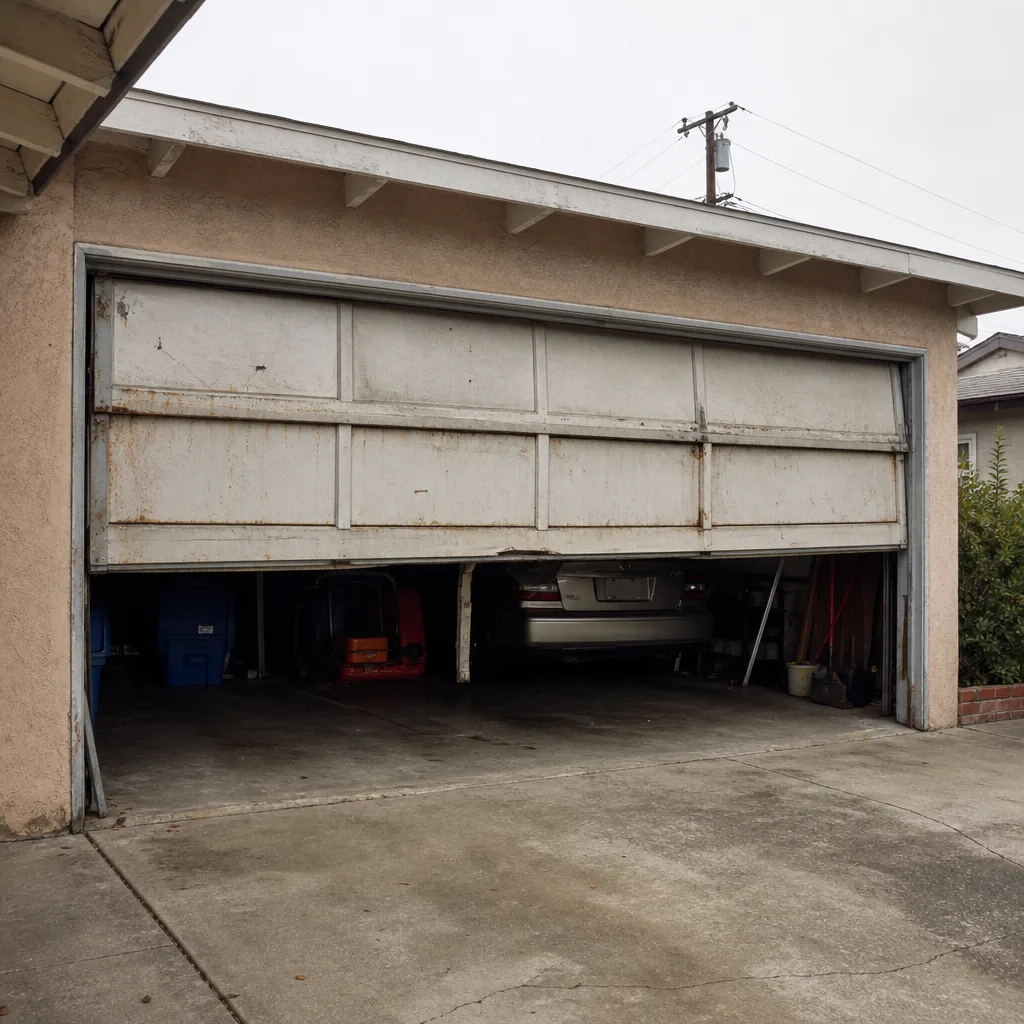 Before
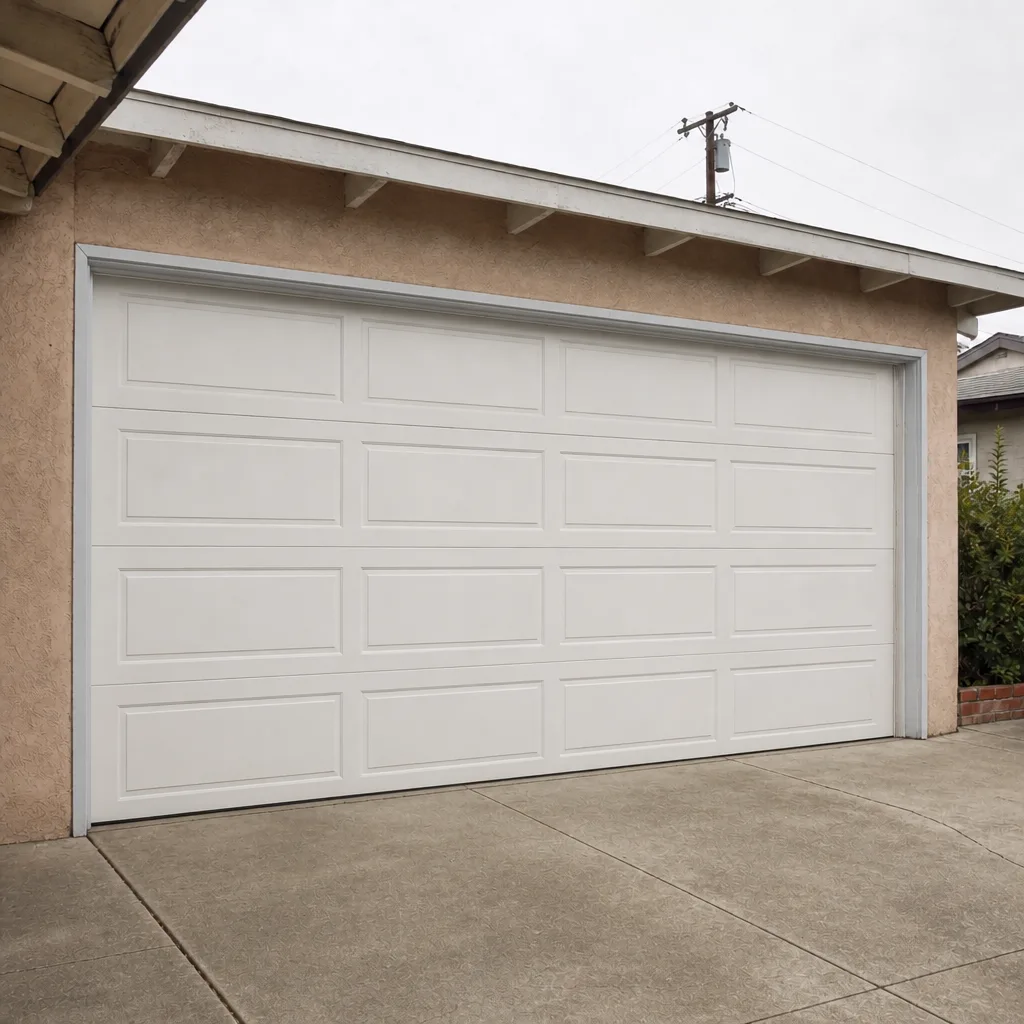 After
When to Call a Professional
A garage door is the largest moving object in most homes, and it fails in ways that are not always obvious from the driveway. You should call a professional when the door won’t open or close smoothly, when you hear grinding, snapping, or banging from the spring assembly, when the opener runs but the door doesn’t move, or when a cable is visibly loose or frayed. You should also call before the door fails, for an estimate on aging springs or opener problems you’ve been tolerating. High-tension springs and cables are dangerous to work on without training, and the stored energy in a torsion spring can release without warning. Do not attempt to release or adjust garage door springs yourself. Prestige Garage Door Repair offers free estimates in Highland. Call (833) 593-5123. We answer 24/7. Fast dispatch from 7am to 7pm, Sunday through Friday.
Frequently Asked Questions
You verify a garage door contractor’s license by confirming the C-61/D28 classification on the California Contractors State License Board database. Enter the license number, verify the classification matches, and check that the status is active and the name matches the company you’re hiring. Then ask about liability insurance separately, because a license and a bond don’t cover property damage or injury the way general liability does. Call (833) 593-5123 for a free estimate, and we’ll walk you through what our own license and insurance cover before any work starts.
A written estimate should include a specific description of the work, the parts being used (including brand and OEM status), the cost separated into parts and labor, the warranty terms, and a total price that won’t change without a second written estimate. In Highland, a document this detailed protects you from invoice creep, and it’s the standard we write to on every job. The estimate is free. The price is set before work begins.
A multi-brand specialist is usually the better hire for repairs and for older Highland homes with mixed equipment, because the brand on your door or opener doesn’t determine whether the job gets done. A single-brand dealer may be the right choice when you’re replacing the entire system and you want a specific manufacturer’s dealer program. We work across eight major brands, including LiftMaster, Chamberlain, Genie, Clopay, Amarr, Wayne Dalton, Craftsman, and Raynor, so the job starts with the equipment you have, not the equipment someone wants to sell you.
Garage door repair in Highland varies by the type of work, the parts required, and the door configuration, so any number without a written estimate is a guess. A single spring replacement, a roller change, and a track realignment are all different jobs with different materials. The written estimate is the price, and estimates are free. That’s true for small repairs and for full replacements. Call (833) 593-5123 and we’ll give you a written number before any work begins.
No. We set the price after seeing the door, not before, and we put that price in writing before any work starts. If the work expands because we find something that wasn’t visible in the initial inspection, we stop and bring you a new written estimate for the added scope. You approve it or you don’t, and the original price for the original scope holds. The free estimate is how the price gets established, and the written estimate is how it stays established.
We answer 24/7. A call outside dispatch hours is booked into the next opening, Sunday through Friday, 7am to 7pm. We’re closed on Saturday, so we won’t dispatch a technician that day. But the phone is answered, and we’ll get you scheduled for the next available opening. The key is to call early, because same-day service during dispatch hours is often available, and the schedule fills from the moment it opens.
The Bottom Line
Hiring a garage door contractor in Highland comes down to three disciplines: verify the license, understand the parts, and demand a written scope of work. The C-61/D28 classification protects you from unqualified operators. OEM parts protect you from a spring that fails half as early as it should. A written scope of work protects you from an invoice that grows while the door lies in pieces in your driveway. Any contractor who handles all three with confidence is one you can work with. Prestige-level work on every job, regardless of size, is the standard we hold. Not because it’s cheaper that way, but because it’s the only way that holds up over time.
Written by the team at Prestige Garage Door Repair, serving Highland since 2014.