
Last updated November 4, 2026
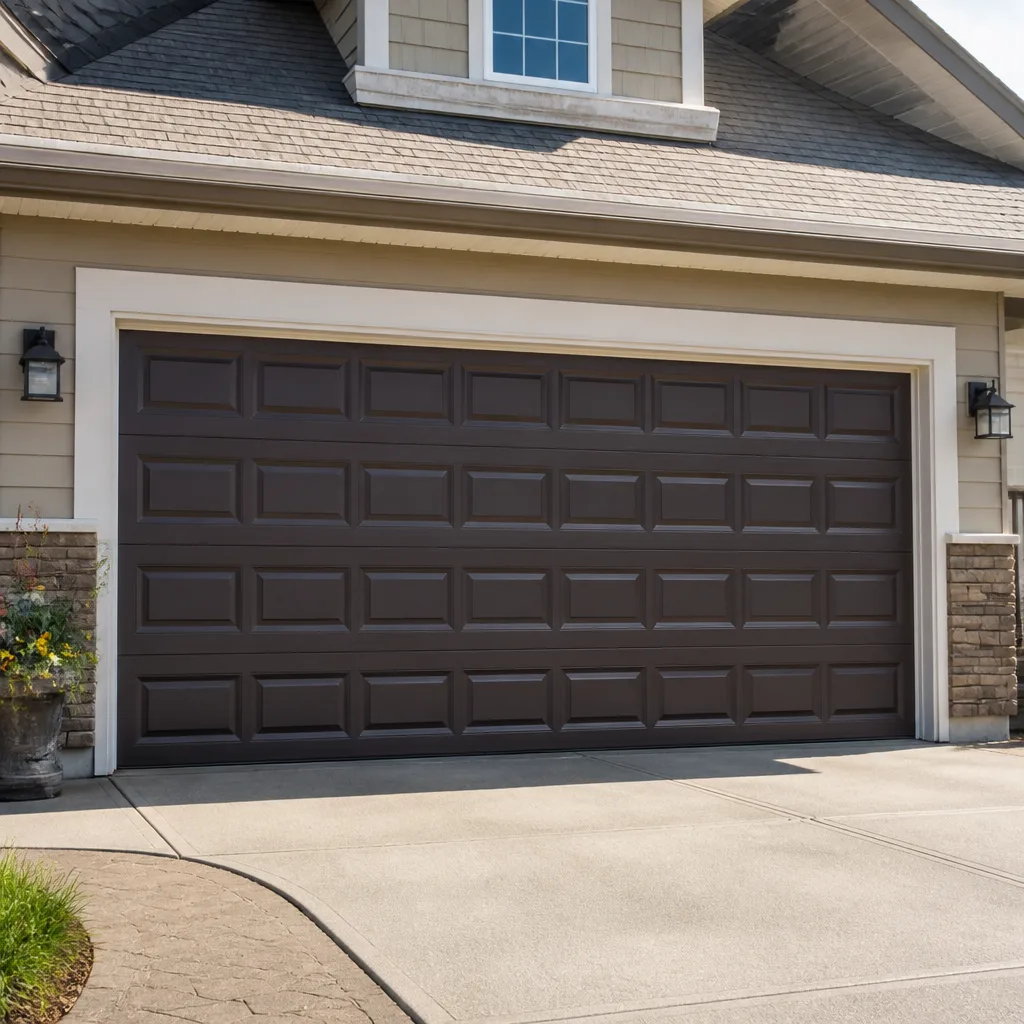 Raised-panel steel
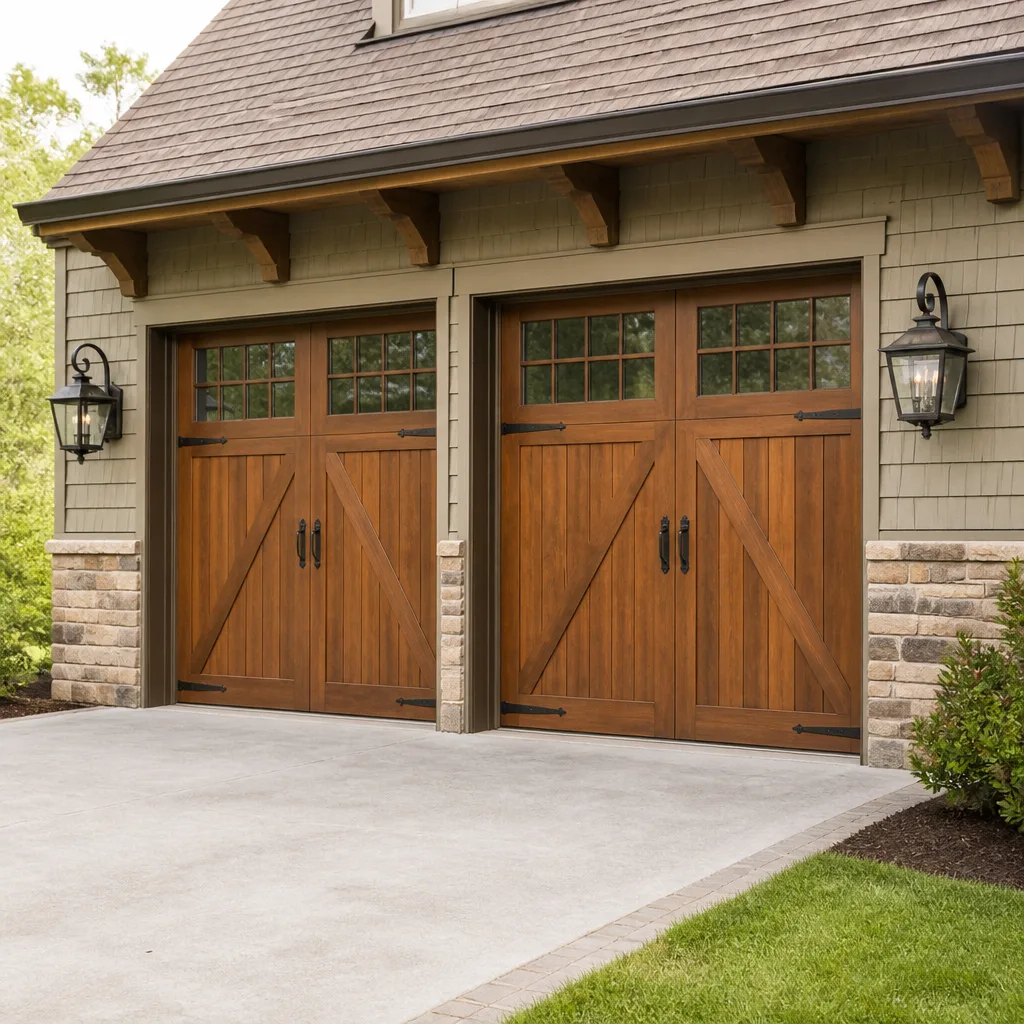 Carriage house
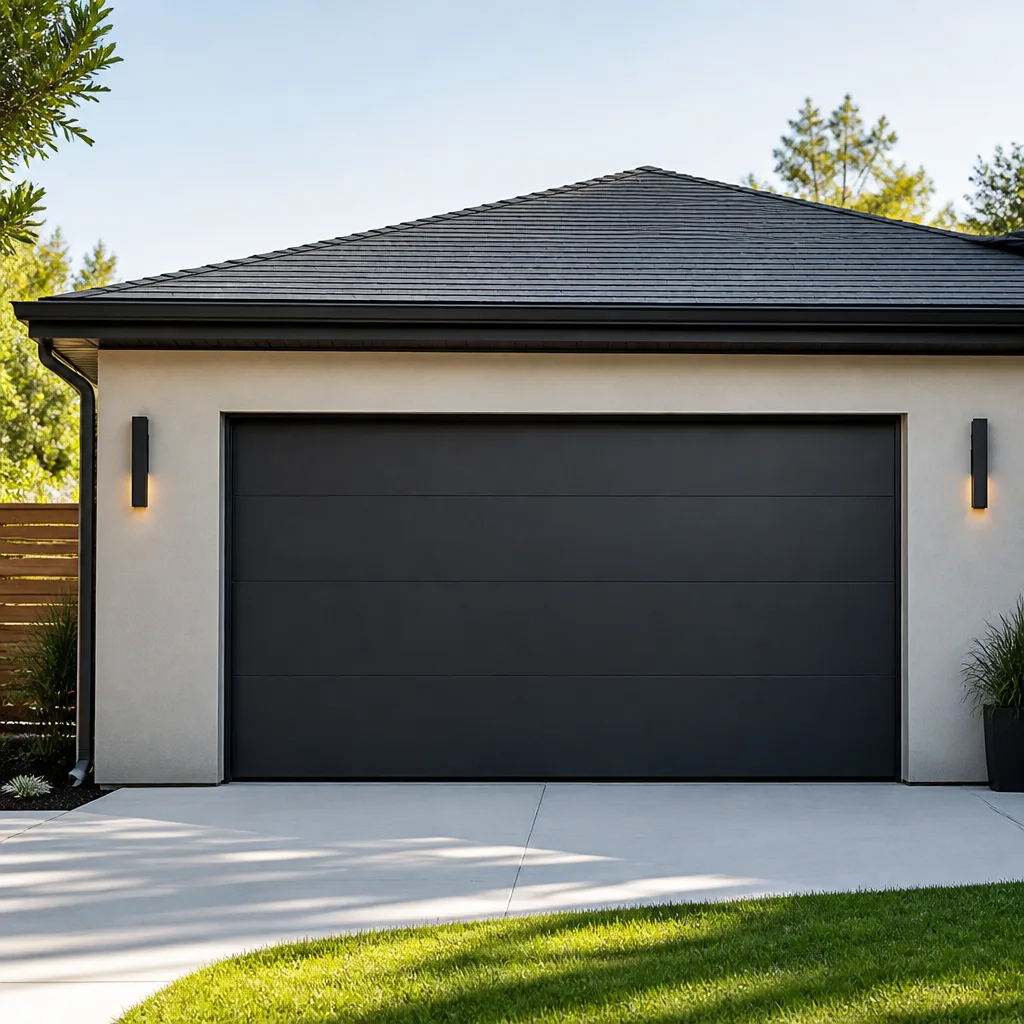 Modern flush
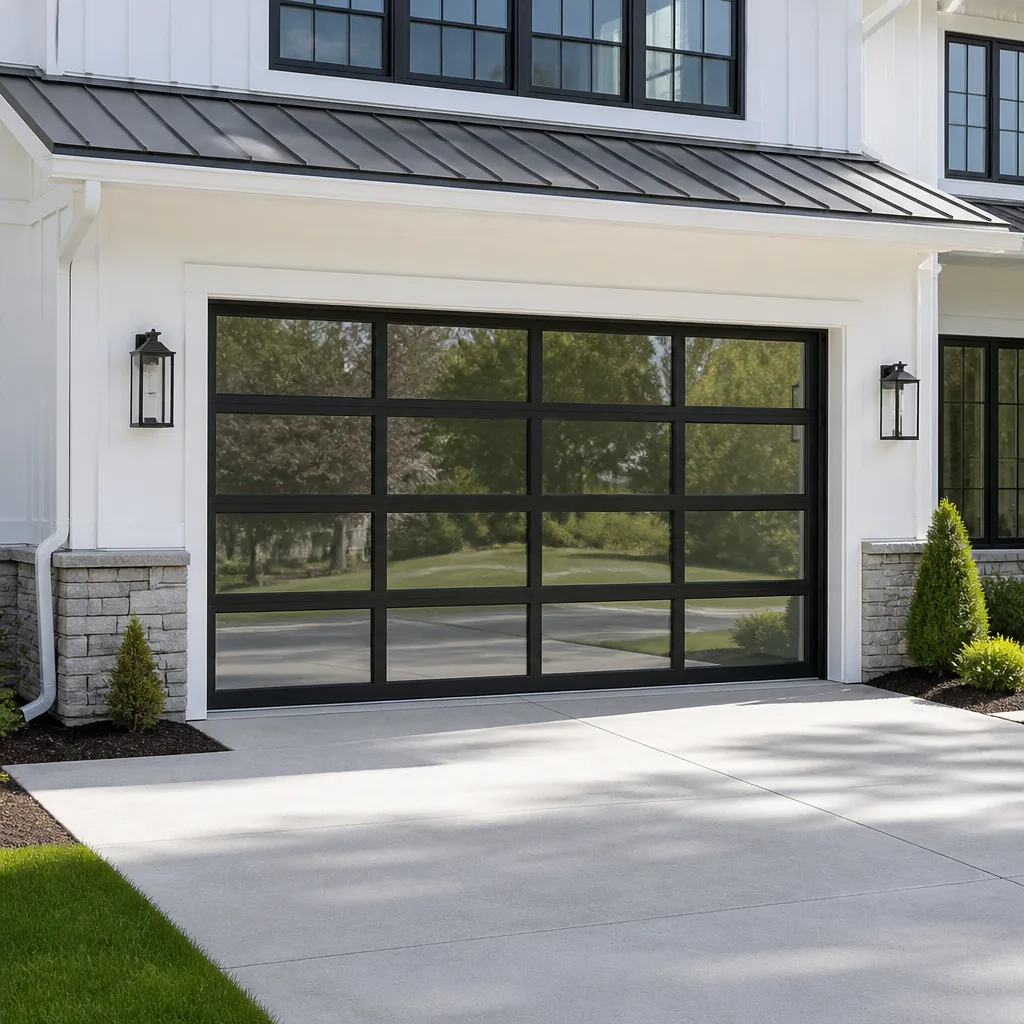 Full-view glass
 LiftMaster openers
 Chamberlain openers
Full 25-point door and opener safety check with every visit - springs, cables, rollers, tracks, and your LiftMaster or Chamberlain opener included
You get a price before we start. It does not change when the truck arrives.
Get your free estimateGarage Door Warning Signs: A Highland Homeowner’s Reference Guide
A garage door that reverses before fully closing is annoying. A garage door that doesn’t reverse when it should is a safety emergency. These two symptoms look similar and get confused constantly, and the confusion leads homeowners in Highland to either ignore a dangerous door or panic over a five-minute adjustment. What most reference guides miss is the difference between a signal that says “schedule service soon” and one that says “stop using this door right now.” This guide triages every major warning sign by urgency, explains what each symptom actually means in terms of the hardware involved, and gives you a clear framework for deciding whether you’re dealing with a maintenance item, a repair, or an emergency. You’ll learn how to assess your door safely from a distance, how Highland’s specific climate affects door hardware, and when a professional should be the one making the call.
Quick Answer
Garage door warning signs fall into three urgency tiers: stop using the door immediately (broken springs, cables off the drum, a door that slams or drops), schedule service within a week (grinding noises, visible wear on rollers or hinges, a door that struggles to open in the morning), and monitor and maintain (minor squeaks, slow operation in summer heat, a bottom seal beginning to lift). For Highland homeowners, the most common heat-related warning sign is an opener motor running hot to the touch, which usually signals failing gears or a strained motor rather than a normal response to valley temperatures. If your door jerks, drops faster than normal, or you hear a loud bang from the spring area, stop using it and call a professional.
Styles & brands we work with
- Raised-panel steel
- Carriage house
- Modern flush
- Full-view glass
- LiftMaster openers
- Chamberlain openers
Table of Contents
- The Three-Tier Urgency Framework: Stop, Schedule, or Monitor
- Warning Signs That Mean: Stop Using the Door Immediately
- Warning Signs That Mean: Schedule Service Within a Week
- Warning Signs That Mean: Monitor and Maintain
- Highland-Specific Warning Signs: What the Heat Does to Your Door
- Sounds Decoded: Grinding vs. Squeaking vs. Popping
- Opener Problem or Door Hardware Problem: How to Tell
- Cable Warning Signs: A Safe Visual Assessment Guide
The Three-Tier Urgency Framework: Stop, Schedule, or Monitor
Every garage door symptom in Highland fits into one of three categories, and knowing which category you’re in prevents both under-reacting and over-reacting. The framework works because garage door failures follow predictable patterns: cables and springs fail suddenly, rollers and hinges degrade gradually, and openers show electronic symptoms before mechanical ones. Here’s the framework in practice, based on what our technicians look for when they assess a door in Highland.
Tier 1: Stop Using Immediately
These are symptoms of a structural or tension failure that makes the door unsafe to operate. The door could drop, come off its tracks, or cause serious injury. If you see or hear any of these, disconnect the opener (if safe to do so) and leave the door closed until a technician arrives.
- Loud bang or snap from the spring area followed by the door feeling suddenly heavy or refusing to open. This means a torsion or extension spring has broken, and the door’s full weight is now unassisted.
- Cable hanging loose, unwound, or off the drum. The cable system is the only thing guiding the door’s travel, and a loose cable means the door can bind, jump the track, or drop unexpectedly.
- Door drops faster than normal when closing or slams the last two feet. Springs that are losing tension or a broken spring will let the door free-fall.
- Door jerks to one side during travel or one side rises while the other lags. This is usually a cable issue or a broken spring on one side, and continued use will damage the track, the rollers, and potentially the door panels themselves.
- Visible separation in a spring or a two-piece spring with a visible gap in the coil. A spring does not break cleanly at the ends; it separates somewhere in the middle, and the gap is visible before total failure.
We’ll say this plainly because it matters: garage door springs and cables are under tension that can cause serious injury or death if handled incorrectly. We recommend a trained professional for any spring or cable repair, full stop. Do not attempt to re-seat a cable or tension a spring yourself. The risk is not about skill level; it’s about stored energy that gives no second chances.
Tier 2: Schedule Within a Week
These symptoms indicate wear that will progress to failure, but the door is still safe to operate for a few days with care. The key distinction is that the door still moves smoothly through its full travel without jerking, binding, or unusual speed.
- Grinding or metallic scraping during operation. This is typically a roller bearing failing, a hinge pin wearing, or the opener’s drive gear stripping. It will get louder, and the component will eventually seize or break.
- Door hesitates or struggles at the same point in its travel every time. This points to a track misalignment, a bent section, or a roller binding in the track. The door is compensating for the resistance, which strains the opener and the springs.
- Opener motor runs but the door doesn’t move, or moves slowly. The motor is working against a problem. The longer it runs without moving the door, the more wear you’re putting on the gears, the chain or belt, and the motor itself.
- Visible wear on rollers such as flat spots, wobble, or missing ball bearings. Rollers are a consumable item, and in Highland’s dry, dusty environment, nylon and steel rollers alike pick up grit that accelerates wear.
- Door sags on one side when open. A door that sits unevenly when fully open often has a worn or failing spring on one side, or a track that has shifted slightly. This gets worse every cycle.
Tier 3: Monitor and Maintain
These are normal signs of aging that don’t require immediate service but should be watched. They’re the garage door equivalent of a tire with 5,000 miles left on it.
- Occasional squeak that goes away after lubricating the rollers and hinges. Squeaking is friction; friction is normal until it becomes grinding.
- Bottom seal lifting slightly at the corners but still making contact along most of the door’s width. Highland’s dry heat can cause the rubber to shrink and curl over time.
- Opener sounds slightly different in summer but still cycles the door in a normal amount of time. Heat changes the viscosity of lubricants, which changes sound; it’s not automatically a failure.
- Small cosmetic cracks in the weatherstripping along the sides of the door that don’t yet let light or air through the gap.
What matters most is that you can place whatever your door is doing into one of these three tiers. A symptom moving from Tier 3 to Tier 2 is your signal to call. We’ve seen Highland homeowners wait until a Tier 2 grinding noise becomes a Tier 1 broken spring, and the repair shifts from a simple component swap to a full door rebalancing.
Warning Signs That Mean: Stop Using the Door Immediately
Some warning signs are not warnings at all. They’re the first visible stage of a failure that has already happened. In our experience across Highland, the most dangerous situations involve one of four components: springs, cables, tracks, and the door’s connection to the opener. Here’s what each of those failures looks like and why immediate action matters.
A Broken Spring That Hasn’t Revealed Itself Yet
A torsion spring doesn’t always snap loudly. Sometimes it cracks, loses a few coils of tension, and leaves the door operating just well enough to convince you everything’s fine. The danger is that the remaining tension is now unevenly distributed, and the spring can fail catastrophically at any moment. Look for a visible gap in the coil, a spring that appears to be “stretched” on one side, or a door that feels significantly heavier when you operate it manually. If you can lift the door only with real effort, or if it wants to drop when you let go, the spring is no longer doing its job. Stop using the door. The door may weigh 150 to 300 pounds depending on its size and material, and your opener is not designed to lift that weight without spring assistance.
Cable Off the Drum or Loose on the Spool
The cables are what keep the door traveling straight and level. When a cable comes off the drum at the top of the door, it usually happens because the door jumped, the spring broke, or a roller came out of the track. From a safe distance, you’ll see the cable hanging loose, wrapped around the shaft at an odd angle, or completely missing from the drum. This is a Tier 1 emergency because the door is now under asymmetric tension. One side is bearing more load than the other, and the next cycle could throw the door off its tracks entirely. We’ve seen doors come off the track and fall into the garage, and the damage to vehicles, stored items, and people is real. Do not operate the door. Call garage door repair immediately.
A Door That Reverses Before Closing With No Obstruction
This is the symptom from our opening hook, and it’s the most common misread in garage door diagnosis. A door that reverses before fully closing could be responding to a photo-eye misalignment, a force-sensor adjustment issue, or a track obstruction. But it’s when the door does NOT reverse that you have an emergency. The photo eyes at the bottom of the door track are designed to reverse the door if anything crosses their beam. If your door closes fully onto an object, or closes even when the beam is blocked, the safety reversal system has failed. That’s a Tier 1 issue. Test it safely: place a roll of paper towels in the door’s path and close the door. If the door does not reverse on contact with the towel roll, stop using the door and call a professional. This test takes thirty seconds and it reveals whether your door’s most important safety feature is still working.
What makes these situations dangerous is not that the door fails. It’s that the failure happens while the door is moving. A door that fails while closed is an inconvenience. A door that fails while closing is how injuries happen. If you’re in Highland and your door is showing any of these Tier 1 symptoms, the right call is to stop using it and call (833) 593-5123. We answer 24/7. Fast dispatch from 7am to 7pm, Sunday through Friday.
Warning Signs That Mean: Schedule Service Within a Week
These are the symptoms that don’t require you to stop using the door today, but they should be on your calendar this week. The reason for urgency is simple: every cycle of a struggling door puts additional wear on every other component. A failing roller doesn’t just wear itself out; it damages the track it rides in. A misaligned track doesn’t just make the door noisy; it forces the opener to work harder, which shortens the motor’s life. In Highland, where many homes see two to four garage door cycles per day, a week of operation is dozens of additional cycles on a component that’s already failing.
Grinding That You Can Feel Through the Wall
Grinding is a specific sound. It’s not a squeak, which is a high-pitched friction noise. Grinding is lower, rougher, and it often accompanies a vibration you can feel through the wall or the floor. The most common source in Highland homes is a roller bearing that has seized or begun to disintegrate. Instead of rolling, the roller is now dragging along the track, and every cycle is shaving metal. The second most common source is the opener’s drive gear, especially on chain-drive openers from LiftMaster, Chamberlain, or Genie. These gears are composite plastic in many models, and once they begin to strip, they deteriorate quickly. The grinding you hear is the gear teeth failing. In both cases, the failure will progress from noise to total stoppage, usually within a few weeks.
Door Shudders or Shakes During Travel
A door that shudders as it moves is usually fighting itself. One side is moving slightly faster than the other, or a roller is binding, or the track has narrowed. You might also notice the door pulsing rhythmically as it opens. This is often a spring issue: if one spring is slightly weaker than the other, or if a single-spring door is wearing unevenly, the tension differential creates a pulsing effect. The fix may be as simple as rebalancing the springs or replacing a single roller, but left alone, the shudder grows into a jerk, and a jerk becomes a cable failure.
Opener Runs But Door Barely Moves
If you press the button and hear the opener running, but the door either creeps or doesn’t move at all, the opener is working against a problem it cannot solve. Common causes include a broken spring (leaving the opener to lift the full door weight alone), a disengaged emergency release that wasn’t re-engaged, or a stripped drive gear. Here’s the key diagnostic point: if the door moves manually with reasonable effort, the issue is likely in the opener itself. If the door is extremely heavy to lift manually, the springs have failed and the opener was never designed to compensate. This distinction matters because the fix and the cost are completely different. An opener issue is a garage door opener repair call. A spring issue is a door repair call. The technicians at Prestige Garage Door Repair diagnose both, and they’ll tell you which one you’re actually dealing with rather than guessing.
These Tier 2 symptoms are the ones where a hundred dollars of prevention beats a thousand-dollar repair. If you’re noticing any of them in Highland, call (833) 593-5123 this week. The estimate is free, and the price is agreed before any work starts.
Warning Signs That Mean: Monitor and Maintain
Not every noise is a crisis. Not every visual change is a failure in progress. Some warning signs are maintenance flags: indicators that your door needs attention, but not urgently. The skill in reading these signs is differentiating between normal aging and accelerated wear. Here’s what to watch for and what to do about it.
Squeaking: A Lubrication Flag
Squeaking is the most common garage door sound in Highland, and it’s also the most misdiagnosed. A squeak during operation is almost always roller bearings or hinge pins that have lost lubrication. The fix is usually a silicone-based lubricant applied to the rollers, hinges, and springs. But here’s the caveat: if you lubricate the door and the squeak returns within a week, or if the squeak has already become a grind, lubrication was never the problem. You’re now in Tier 2 territory. Also, never lubricate the belt on a belt-drive opener. The belt is designed to run dry, and lubricant will cause it to slip.
Bottom Seal Lifting at the Corners
Highland’s dry heat causes rubber and vinyl to contract and harden. The bottom seal on your garage door, which runs along the bottom edge and compresses against the concrete floor, is particularly vulnerable. You’ll notice it lifting at the corners first, where the material is under the most tension. A lifting seal lets dust, leaves, and insects into the garage, and it reduces the door’s insulation value. This is a monitor-and-maintain item for most of the year, but if the seal has pulled away from the concrete across more than a quarter of the door’s width, it’s time to replace it. The part is inexpensive, and replacement is a quick job.
Opener Sounds Different But Still Cycles Normally
Heat changes how things sound. In the summer, the lubricant inside the opener’s gear housing gets thinner, which changes the pitch and tone of the motor. The door may also move slightly slower. None of this is a failure in progress by itself. What you’re listening for is a change that persists across seasons or a sound that gets progressively louder or rougher over a period of weeks. If the opener sounds different in July but the door still opens and closes in the same amount of time, that’s normal. If the sound change is accompanied by hesitation, shuddering, or a burning smell, that’s a different story, and it belongs in Tier 2.
The value of the monitor-and-maintain category is that it gives you a baseline. You can’t detect a change unless you know what normal looks and sounds like. Spend a minute watching your door cycle. Listen to it. Note where the sounds come from. Then when something changes, you’ll know whether it’s a seasonal shift or a component telling you it’s time to call.
Highland-Specific Warning Signs: What the Heat Does to Your Door
Highland’s climate is tough on garage doors in ways that don’t show up in generic warning sign guides written for the national market. The summers are hot and dry. The temperature swings between day and night are significant, especially in the spring and fall. The air carries fine dust that works its way into every moving component. These conditions create a specific set of warning signs that Highland homeowners should recognize.
Opener Motor Running Hot to the Touch
This is the number one heat-specific symptom in Highland, and it deserves careful interpretation. An opener motor that’s warm after cycling the door is normal. An opener motor that’s hot to the touch, especially after only one or two cycles, is usually a sign of strain. The motor is working harder than it should be, and the most common reason is a door that’s heavy because the springs are weakening. The springs designed for your door counterbalance its weight. When they lose tension, the opener picks up the slack, and the motor runs hot. Other causes include a failing capacitor or a drive gear under excess friction. If the motor is hot enough to be uncomfortable to hold your hand against, it’s time for a service call. That’s not the heat of Highland summer. That’s a motor telling you it’s failing.
Door Sagging on One Side After Summer
Highland’s temperature changes cause metal to expand and contract. Over multiple seasons, this thermal cycling can cause a door to shift on its hinges or a track to move slightly out of alignment. You may notice the door sits a little lower on one side when open, or that it closes with a slight gap on one edge. This is often a hinge issue rather than a spring issue, and it’s more common on older doors that have been through years of Highland summers. The fix is usually a hinge replacement or track realignment. What you shouldn’t do is ignore it, because a door that’s out of balance will wear out springs, rollers, and the opener motor faster than a balanced door.
Bottom Seal Pulling Away From Concrete
If you’re in Highland and your garage door’s bottom seal appears to have shrunk away from the floor, you’re seeing what years of dry heat do to rubber and vinyl. This is different from physical damage or tears, which are caused by impact or age. The seal simply contracts, and the corners lift first. The practical consequences are dust intrusion, reduced energy efficiency if your garage is attached to your home, and an uneven surface that can affect the door’s seal against the floor. Replacement is the fix, and it’s the kind of job that takes a technician less than an hour.
A Note on Hail and Storm Damage
Hail is uncommon in Highland. If you’re reading a national guide that describes hail dents as a local concern, that’s not written for your climate. What Highland homeowners should watch for instead is impact damage from vehicles or equipment, and general wear from the fine dust that works into hinges and tracks. If you do see dents in your door panels, they’re most likely from something hitting the door from inside the garage, not from weather. Dents don’t automatically require service, but they can affect the door’s structural performance if they’re deep enough to bend the panel’s internal framing.
Highland’s climate is more forgiving than cold-weather markets in some ways: no freeze-thaw, no ice, no snow load. But it has its own demands. The heat and dust are constant factors, and the warning signs they create are specific. Recognizing them early is the difference between a component replacement and a complete door rebuild.
Sounds Decoded: Grinding vs. Squeaking vs. Popping
Your garage door speaks in a limited vocabulary, and each sound has a meaning. The trick is knowing what actually generates each noise, because different components make different sounds when they fail. Here’s the decoder, based on what our technicians hear on service calls throughout Highland.
Grinding: Metal on Metal, or Gear Teeth Breaking
Grinding is a low, rough, uneven sound that often comes with vibration. It means two surfaces that should be rolling or sliding smoothly are now scraping against each other. In garage doors, grinding has three primary sources. First, roller bearings have failed, and the roller is now dragging along the track instead of riding in it. Second, the hinges connecting the door sections have worn to the point where the metal pins are grinding inside the hinge barrel. Third, the opener’s drive gear is stripping. On chain-drive openers like those from LiftMaster, Chamberlain, and Genie, the gear that transfers motor power to the chain is often composite, and its failure produces a distinctive grinding-whirring sound. Grinding is a Tier 2 symptom that becomes Tier 1 if you ignore it long enough.
Squeaking: Friction Without Damage (Yet)
Squeaking is friction between surfaces that are still moving but need lubrication. It’s a high-pitched, rhythmic sound that usually follows the door’s movement. Common sources are roller stems, hinge pins, and occasionally the track itself if the door is slightly out of alignment and the roller is rubbing against the track side. A proper silicone-based lubricant typically resolves squeaks. If it doesn’t, the squeak was actually the early stage of a grinding problem, and you should have the door inspected.
Popping: Springs and Tracks Under Stress
Popping is the sound you need to take most seriously. A sharp pop or bang during door operation usually means a spring is releasing tension unevenly, a cable is catching and slipping on the drum, or the track is flexing because a bracket is loose. In torsion spring systems, a single loud bang frequently means the spring has broken. In extension spring systems, the pop can come from the spring stretching or a safety cable moving. The distinction: a spring that breaks loudly has already failed. A spring that pops quietly during operation is warning you that it’s about to. If you hear a pop, check whether the door still moves smoothly. If it does, the spring is still working but compromised. If it doesn’t, the spring is gone. Either way, call a professional. Springs are not a DIY repair, and the stored energy in a garage door spring can cause serious injury.
Rattling: Something Is Loose
Rattling is usually a hardware issue: a loose bolt, a worn roller, a bracket that’s come slightly away from the door or the track. It’s a high-frequency, irregular sound that doesn’t follow the smooth rhythm of squeaking or grinding. The fix is often simple: tighten hardware, replace a roller, re-secure a bracket. But repeated rattling after tightening suggests the underlying component is wearing, and you should have it checked before the loose part becomes a broken part.
The discipline of listening to your door is not about becoming an expert. It’s about establishing a baseline. When you know what your door sounds like on a normal day, the abnormal days announce themselves.
Opener Problem or Door Hardware Problem: How to Tell
This is the question that drives the most confusion in garage door diagnosis, and it matters because the fix and the cost are completely different. An opener repair might be a gear replacement or a logic board swap. A door hardware repair might be a spring replacement or a cable re-seat. Conflating the two leads to fixing the wrong thing, which wastes money and leaves the original problem in place. Here’s how to tell which system is actually at fault.
Step 1: Pull the Emergency Release
Every opener has a red emergency release cord hanging from the rail. Pulling it disconnects the door from the opener, allowing you to operate the door manually. This test is safe to do on a flat floor with the door closed. Pull the release, then try to lift the door manually. Here are the possible results:
- Door lifts smoothly with moderate effort and stays in place when you release it. This means the springs are doing their job and the door hardware is functioning. If the door wouldn’t operate with the opener connected, the problem is in the opener itself.
- Door is very heavy to lift or drops when you release it. This means the springs have failed or lost tension. The opener was never designed to lift the door alone, and the strain has likely damaged the opener’s gears and motor. You may need both spring replacement and opener repair.
- Door lifts unevenly or binds at a certain point. This points to a track, roller, or hinge problem. The door hardware is the issue, not the opener.
- Door won’t move at all even with the release pulled. This could be a track obstruction, a broken cable that’s jammed the door, or a spring failure severe enough to lock the system. It’s a Tier 1 situation, and you should call a professional rather than force the door.
Step 2: Watch and Listen While the Door Cycles
If the door operates but makes noise or moves poorly, watch where the noise comes from and when it happens. Noise from the opener rail or motor during operation suggests the opener’s drive mechanism is the problem. Noise from the door panels, hinges, or track suggests the door hardware is the problem. A door that shudders during travel with noise at the rollers is a hardware issue. A door that moves smoothly but the opener sounds like it’s struggling is an opener issue.
Step 3: Check the Opener’s Response to the Wall Button vs. the Remote
If the opener responds to the wall button but not the remote, the issue is usually the remote’s battery, the opener’s receiver, or interference. If it responds to neither, the issue could be the opener’s logic board, the wall button wiring, or a power problem. If the door creeps, shudders, or stalls, you’re back to the mechanical tests above.
Here’s the key insight the national guides miss: many “opener failures” are actually spring failures that killed the opener. The springs support the door’s weight. When they fail, the opener carries the full load, and something in the opener gives out: a gear, a sprocket, a logic board. A competent technician always checks the springs before condemning the opener. Our team works across LiftMaster, Chamberlain, Genie, and other major brands, and the diagnostic process is the same: verify the door’s mechanical health first, then evaluate the opener. That’s how you avoid paying for an opener replacement when the real issue was a spring.
If you’ve gone through these steps and you’re still not sure which system is failing, call (833) 593-5123. We’ll diagnose the door and the opener, and we’ll tell you which one actually needs work. The estimate is free.
Cable Warning Signs: A Safe Visual Assessment Guide
Garage door cables are the most dangerous component in the system, and the warning signs they give are also the most visually obvious if you know what to look for. This guide covers what you can safely assess from a distance. Do not touch the cables, and do not attempt to adjust or re-seat them. The tension in a cable connected to a torsion spring can be enough to sever fingers or cause other serious injury.
What Normal Cables Look Like
On a torsion spring system, you’ll see two cables, one on each side of the door. They run from the bottom brackets on the door up to the drums at the top of the shaft. When the door is closed and the springs are under tension, the cables should be tight and wrap neatly around the drums in a single smooth layer. There should be no gaps, no crossed wraps, and no visible fraying.
Warning Sign 1: Fraying or Rust on the Cable
From a distance, look at the cables where they enter the drums and where they attach to the bottom brackets. Fraying looks like individual wire strands separating from the main cable, often creating a fuzzy or spiky appearance. Rust appears as orange-brown discoloration or flaking along the cable’s surface. Both are Tier 2 warning signs: the cable is compromised but not yet failed. It should be replaced before it breaks.
Warning Sign 2: Cable Loose or Sagging When the Door Is Open
When the door is fully open, the cables should still have some tension. A cable that sags, droops, or hangs loose when the door is open means the cable has jumped the drum or the spring has lost tension. This is a Tier 1 condition. The door is now under unbalanced load, and operating it risks throwing the door off its tracks.
Warning Sign 3: Cable Unwinding From the Drum
If the door is partially open and you can see the cable winding off the drum at an angle, crossing over itself, or bunching on one side of the drum, the cable is misaligned. The next cycle could throw the door off balance or snap the cable entirely. Stop using the door.
Warning Sign 4: Door Sits Crooked When Closing
This is a visual sign you can catch from across the garage. If the door starts to close and one side is visibly lower than the other, the cables are operating unevenly. This often happens when one cable is slightly shorter due to stretching or when one drum is slipping. Operating the door in this state puts extreme stress on the tracks and can cause the door to jump the track entirely.
The Safe Assessment Rule
You can assess all of these signs from at least arm’s length away, without touching anything. You don’t need to open the panels, climb a ladder to inspect the drums, or reach into the track mechanism. If your visual assessment shows anything unusual, the correct action is to stop using the door and call a professional. The technicians at Prestige Garage Door Repair handle cable replacement, drum re-seating, and spring rebalancing as part of our garage door repair service in Highland. We’ll make sure the door is balanced, the cables are seated correctly, and the system is safe to operate before we leave.
See the difference
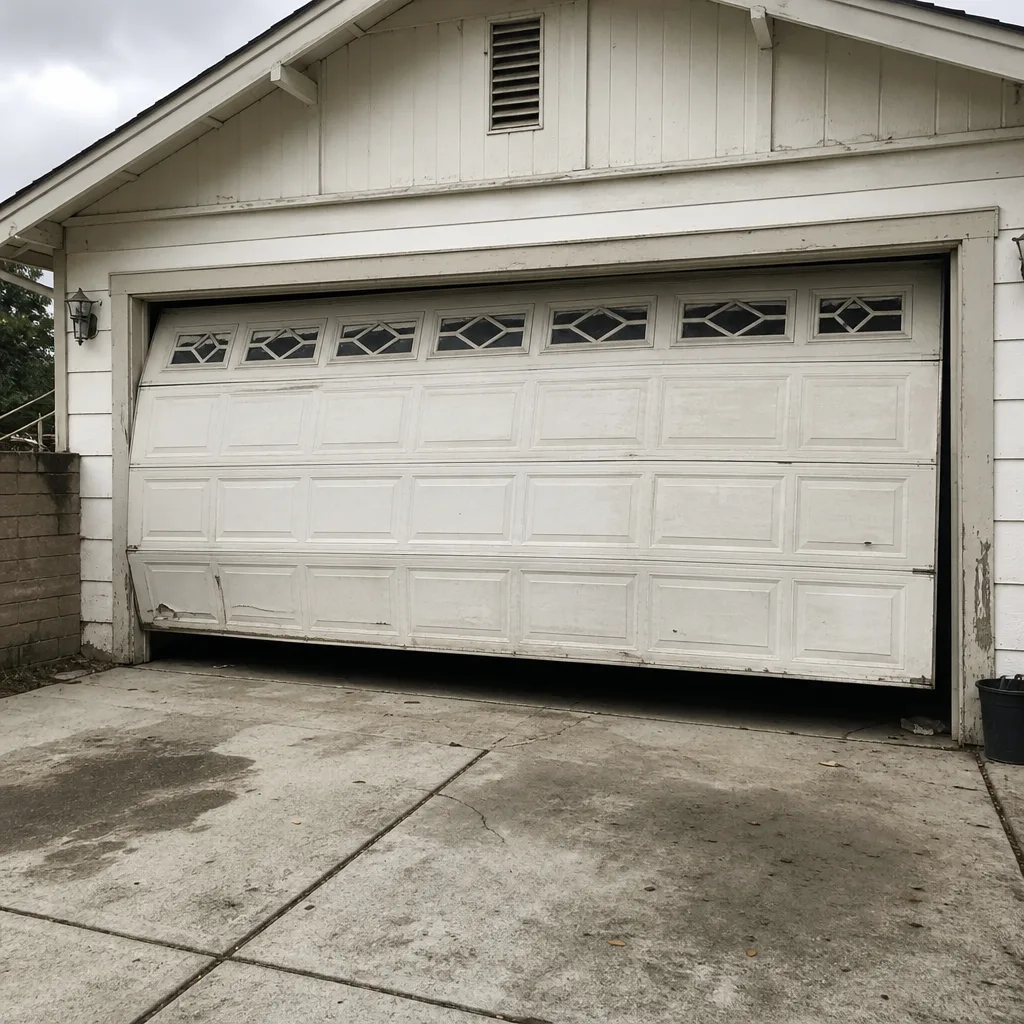 Before
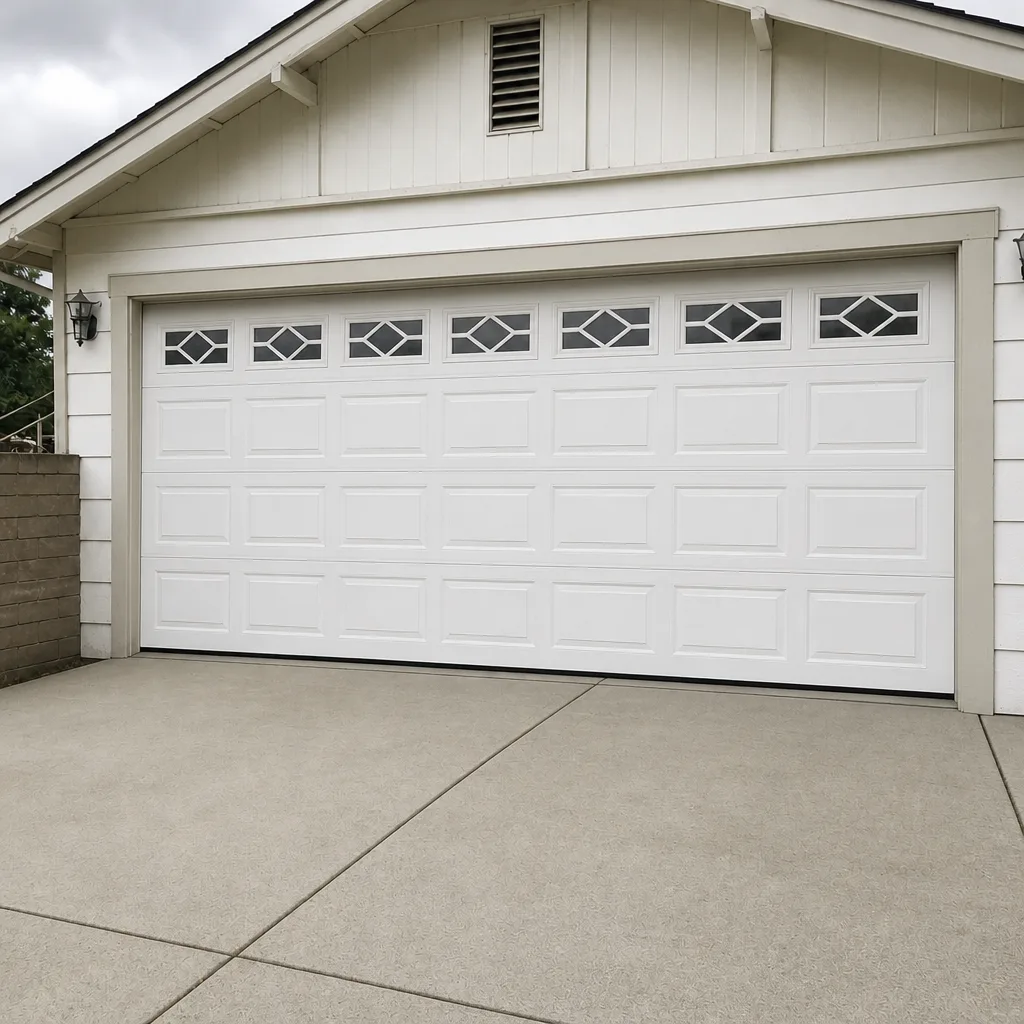 After
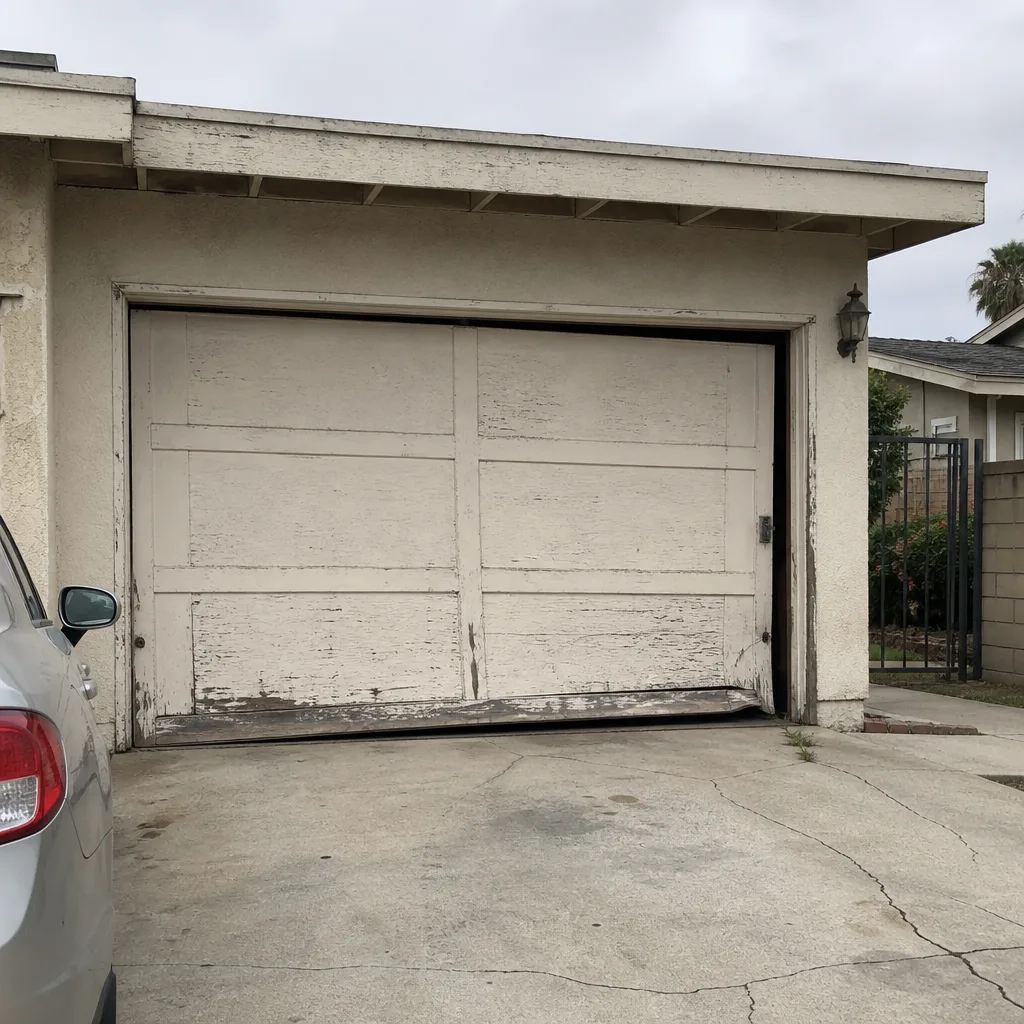 Before
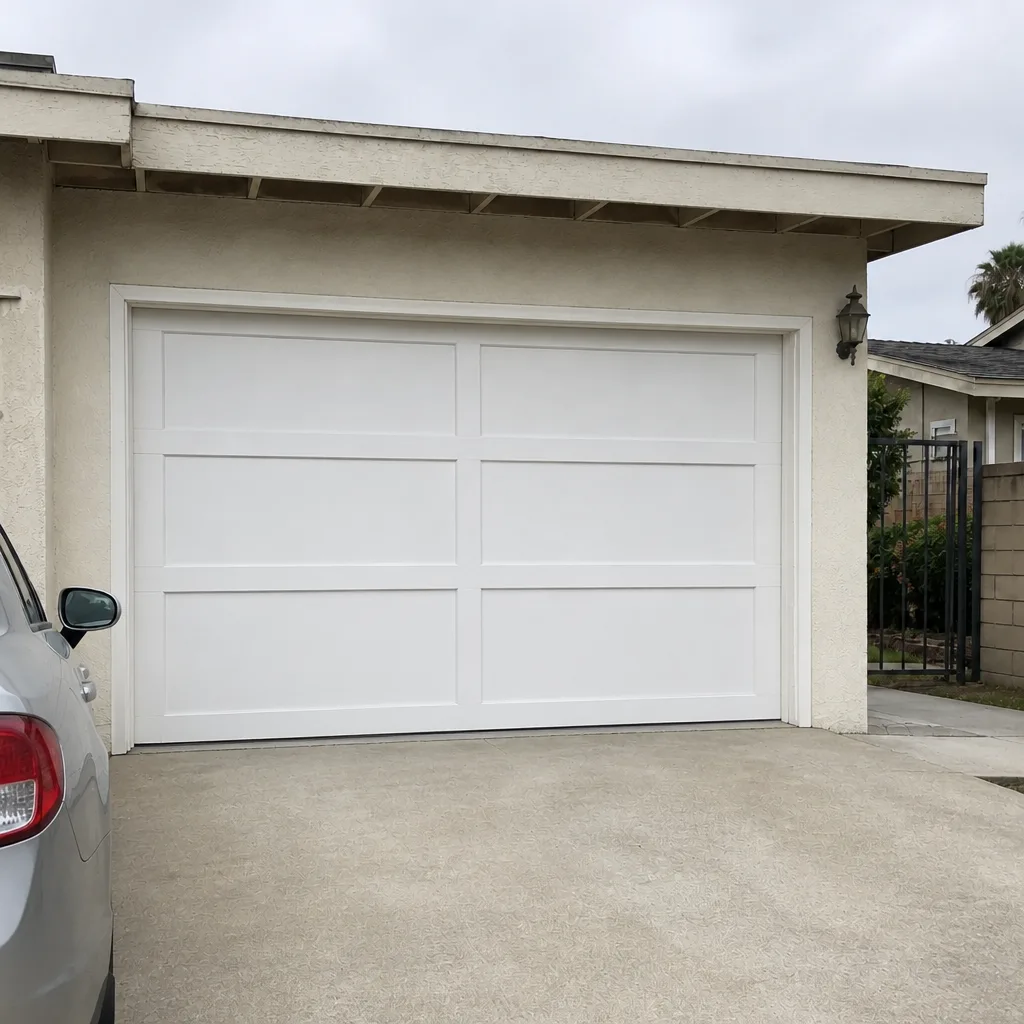 After
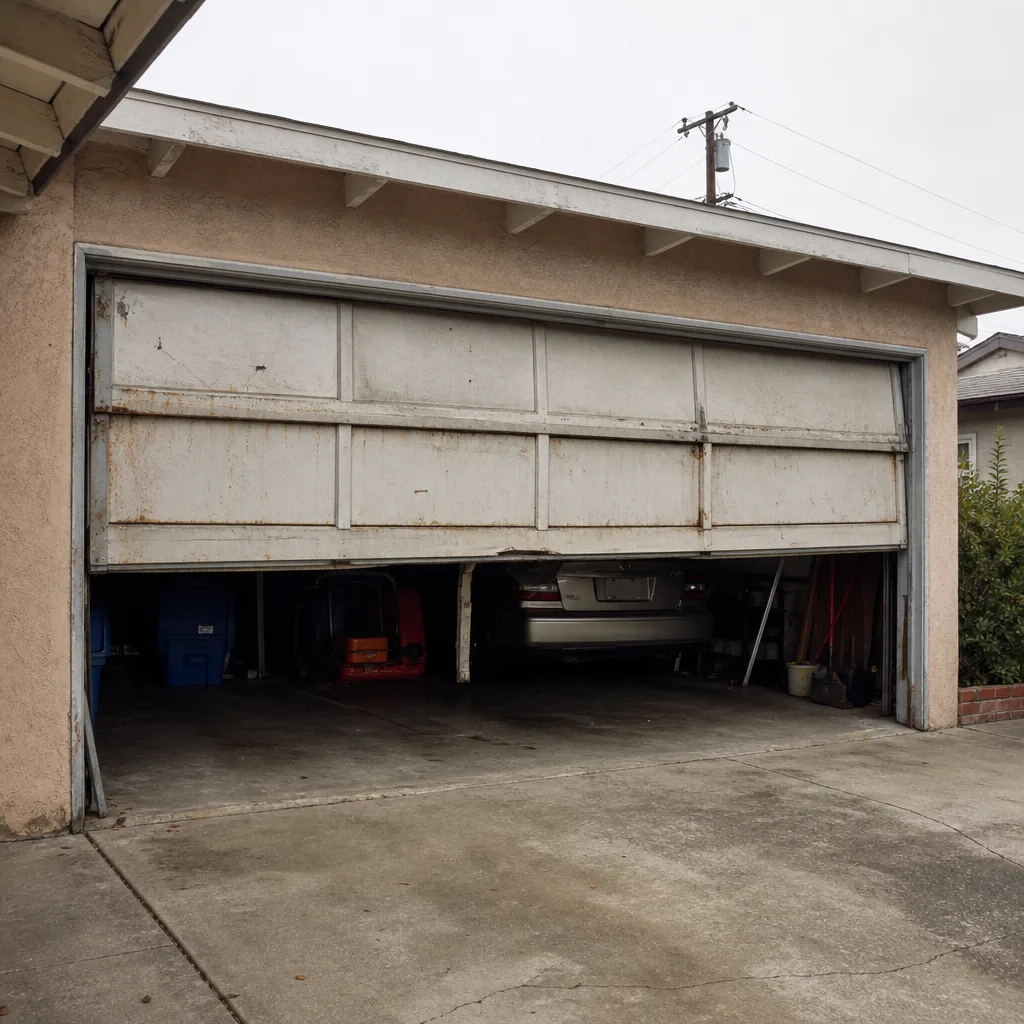 Before
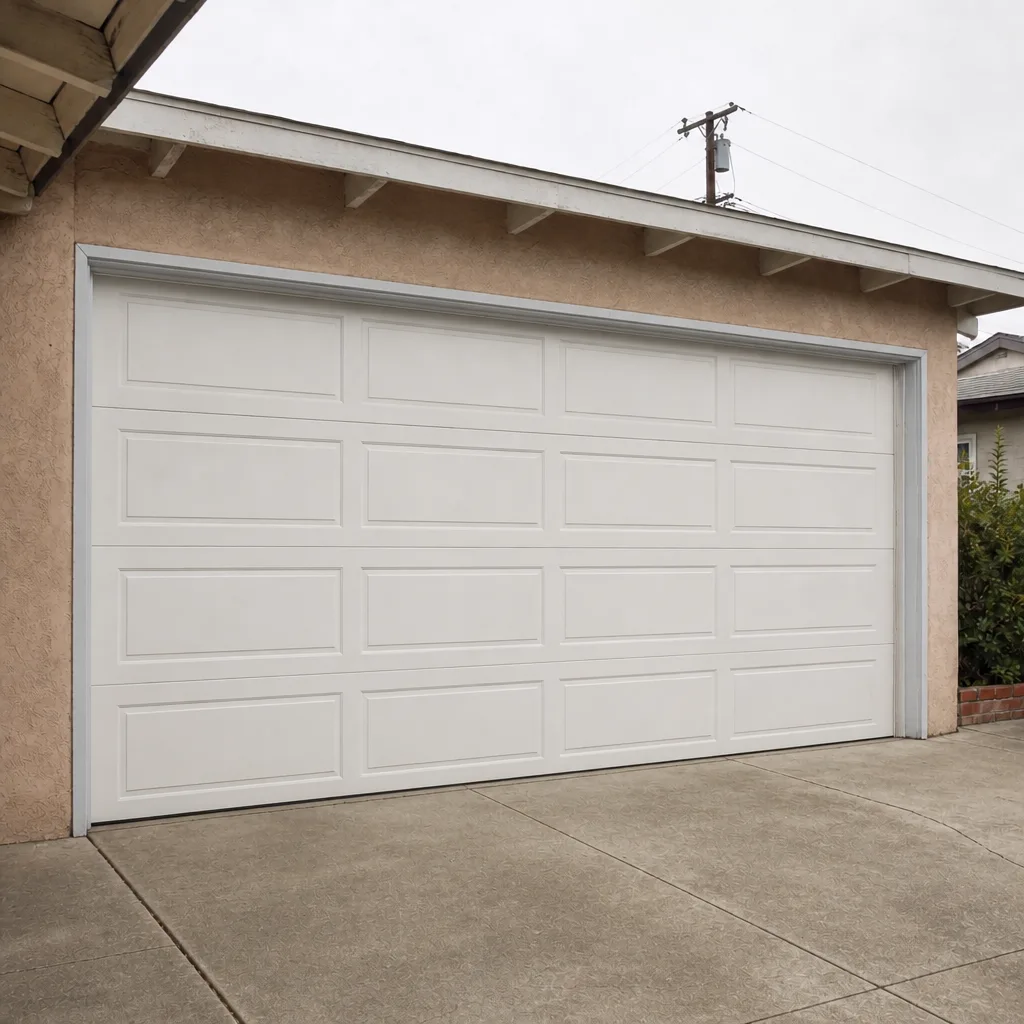 After
Common Mistakes to Avoid
- Lubricating a grinding door and expecting it to fix itself. Grinding means metal is being damaged, not that it needs oil. Lubricant may quiet it temporarily, but the underlying failure is still progressing, and you’ve now delayed a repair that was already overdue.
- Assuming a loud bang means the door is still safe because it still moves. A broken spring can leave the door movable in some configurations, but every cycle is now damaging the opener and the remaining hardware. The door is not safe, even if it moves.
- Testing the safety reversal with a person or pet. The auto-reverse should be tested with an inanimate object like a roll of paper towels or a piece of 2×4 lumber. Never use a person, and never use a pet. If the reversal fails, the test object gets crushed. You don’t want that to be a living thing.
- Ignoring a change in sound because “it’s always made that noise.” Doors change their sound profile over time, and a new noise is a new piece of information. A door that has always squeaked may suddenly start grinding, and the grinding is the signal that a component has hit the end of its life.
- Operating the door with a visibly loose or frayed cable. Every cycle with a damaged cable is a bet against failure. The cable is the only thing keeping the door in its track under symmetric tension. When it fails, it fails suddenly, and the door can drop or jump.
- Deciding it’s the opener without checking the springs. Opener failures often follow spring failures. Replacing the opener without fixing the springs means the new opener will be working against the same overloaded condition, and it will fail again quickly.
- Forcing a door that’s binding or stuck. If the door won’t move, something is preventing movement. Forcing it with the opener or by hand risks breaking cables, bending tracks, or damaging the door panels. Stop, assess, and call if needed.
When to Call a Professional
If your door is in Tier 1, call now. That includes any of the following: a spring that has broken or shows a visible gap, a cable that’s loose or off the drum, a door that drops or slams, a door that jerks to one side, or a safety reversal system that fails the paper-towel test. These are not DIY situations, and they’re not “wait and see” situations.
If your door is in Tier 2, call this week. Grinding noises, shaking, an opener motor that’s hot to the touch, a door that struggles at the same point in its travel, or a seal that’s fully pulled away from the floor are all signs of accelerated wear. The longer you wait, the more components get damaged. Prestige Garage Door Repair offers free estimates in Highland – call (833) 593-5123. We answer 24/7. Fast dispatch from 7am to 7pm, Sunday through Friday. We’ll assess the door, tell you exactly what’s failing, and provide a written price before any work starts.
If your door is in Tier 3, keep monitoring and maintain it. Lubricate the rollers and hinges, watch for changes in sound, and test the safety reversal monthly. The best repair is the one you prevent with good habits and early attention.
Frequently Asked Questions
How much does garage door spring repair cost in Highland?
Garage door spring replacement in Highland typically costs between $180 and $340 per spring, with a matched pair usually running $360 to $680 including labor. The exact price depends on the spring size, the door weight, and whether we’re replacing